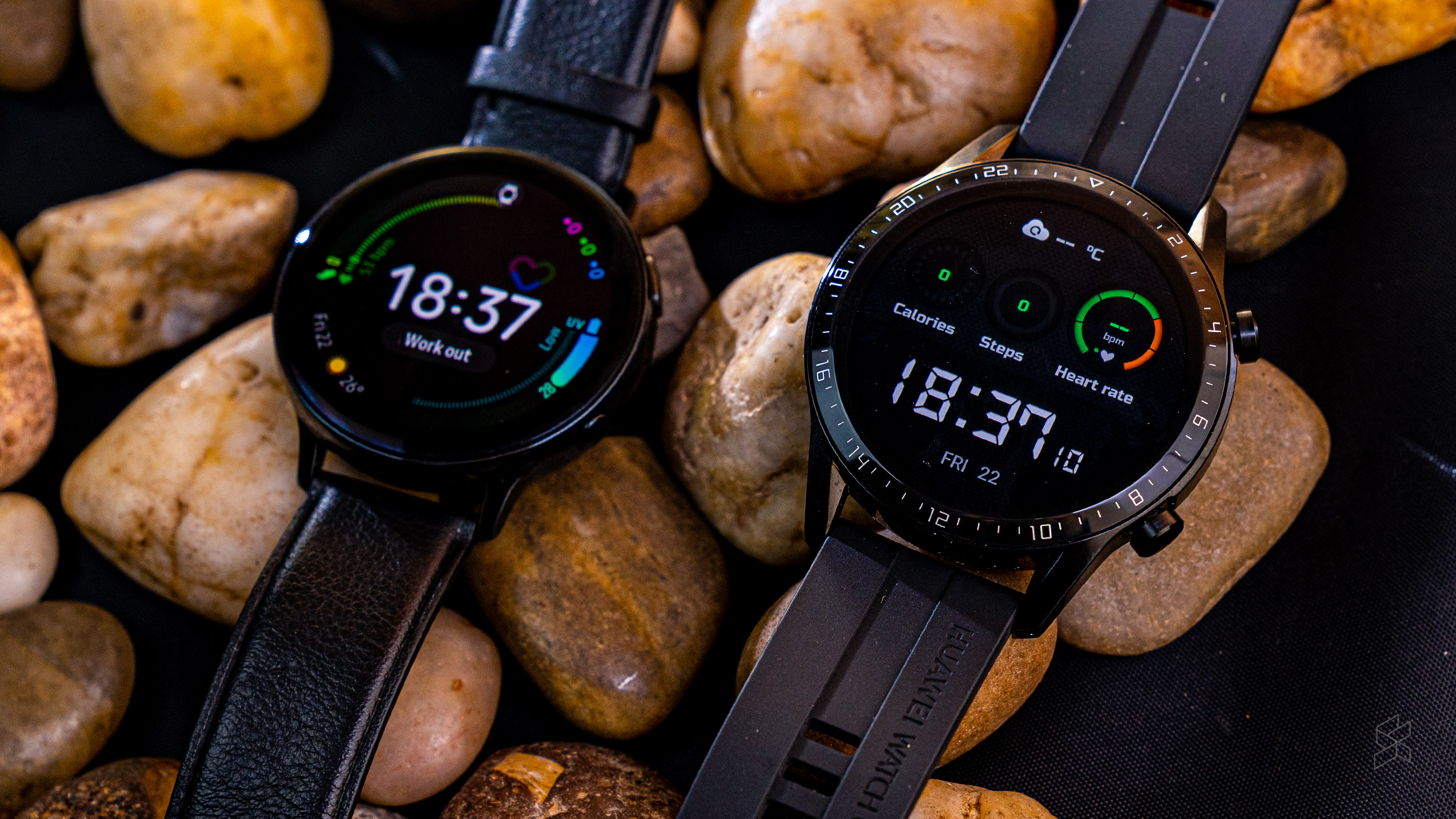
Okay, here’s a detailed, 2000-word head-to-head comparison between the anticipated Samsung Galaxy Watch 8 and the existing Huawei Watch GT 5, aiming to cover every significant aspect for potential buyers.
Clash of the Titans: Samsung Galaxy Watch 8 vs. Huawei Watch GT 5 – A Head-to-Head Battle for Your Wrist
The smartwatch market is a fiercely contested arena, with tech giants constantly pushing the boundaries of what a wearable device can do. On one side, we have Samsung, a dominant force in the Android ecosystem, with its highly anticipated Galaxy Watch 8 poised to continue its legacy of sophisticated, feature-rich smartwatches. On the other, Huawei, a brand that has carved out a niche with its focus on exceptional battery life, robust fitness tracking, and elegant design, represented by its formidable Watch GT 5.
While the Samsung Galaxy Watch 8 is still a subject of speculation and leaks at the time of writing, we can confidently anticipate its core philosophy and feature set will evolve from its predecessors (like the Galaxy Watch 6 series), incorporating the latest advancements in Wear OS and Samsung’s proprietary health technologies. The Huawei Watch GT 5, conversely, is a known quantity, building upon the successful GT series with its distinct approach to smartwatch functionality.
This article will pit these two titans against each other, dissecting every aspect from design and display to performance, health tracking, battery life, and smart features, to help you determine which wrist-worn companion truly deserves a place on your arm.
1. Design & Build Quality: Aesthetics Meets Durability
A smartwatch is not just a gadget; it’s a fashion statement and an extension of your personal style. Both Samsung and Huawei understand this, offering distinct design philosophies.
Samsung Galaxy Watch 8 (Anticipated):
Samsung’s Galaxy Watch series has consistently offered a blend of classic watch aesthetics with modern tech sensibilities. We can expect the Galaxy Watch 8 to continue this trend, likely offering at least two distinct versions: a more traditional "Classic" variant, potentially retaining the beloved physical rotating bezel for intuitive navigation, and a sleeker, more minimalist "Standard" or "Pro" model.
- Materials: Premium materials are a given. Expect stainless steel or even titanium for the Classic/Pro models, and robust aluminum for the standard version. Sapphire crystal glass for display protection is also highly probable, offering superior scratch resistance.
- Form Factor: The Galaxy Watch 8 will likely come in multiple sizes (e.g., 40mm, 44mm, and potentially a larger "Pro" size) to cater to different wrist sizes and preferences. The overall design will likely be refined, with slimmer bezels and a more integrated look.
- Comfort: Samsung watches are generally known for their comfortable fit, thanks to ergonomic designs and a wide array of strap options, including silicone, leather, and fabric. The watch’s relatively lightweight construction (especially the aluminum variants) ensures it’s suitable for all-day wear and during workouts.
- Water Resistance: An essential feature for any modern smartwatch, 5ATM water resistance is expected, making it suitable for swimming and shallow water activities.
Huawei Watch GT 5:
The Huawei Watch GT series has always emphasized a sophisticated, often rugged, and distinctly "watch-like" appearance. The GT 5 continues this legacy, often drawing inspiration from traditional chronographs while integrating advanced tech.
- Materials: Huawei frequently uses high-quality materials such as aircraft-grade titanium, stainless steel, and ceramic for its watch bodies, paired with sapphire glass on its display. This gives the GT 5 a premium, durable feel.
- Form Factor: Huawei watches tend to lean towards larger, bolder designs, often featuring prominent lugs and a more substantial presence on the wrist. While specific sizes for the GT 5 might vary by region or model, they generally cater to users who prefer a larger watch face. The physical buttons are often tactile and well-integrated.
- Comfort: Despite their often larger size, Huawei watches are generally well-balanced and comfortable. They come with a variety of strap options, from fluoroelastomer for sports to leather and metal links for more formal occasions.
- Water Resistance: Like Samsung, the Huawei Watch GT 5 typically boasts 5ATM water resistance, making it swim-proof and robust enough for most water-related activities.
Design Verdict:
If you prefer a classic, versatile design with the option of a physical rotating bezel and multiple size choices, the Galaxy Watch 8 will likely appeal more. If you appreciate a bold, premium, and often more rugged "traditional watch" aesthetic with exceptional build quality, the Huawei Watch GT 5 stands out. Both offer high levels of craftsmanship, but their stylistic inclinations differ significantly.
2. Display: A Window to Your Digital World
A smartwatch’s display is its primary interface, crucial for readability, vibrancy, and interaction. Both brands utilize AMOLED technology for stunning visuals.
Samsung Galaxy Watch 8 (Anticipated):
Samsung is a leader in display technology, and the Galaxy Watch 8 will undoubtedly feature a top-tier Super AMOLED display.
- Technology: Super AMOLED offers vibrant colors, true blacks, and excellent contrast.
- Brightness: Expect high peak brightness (likely over 1,000 nits) ensuring excellent readability even in direct sunlight.
- Resolution & Sharpness: High pixel density (PPI) will result in crisp text and detailed graphics, making notifications and watch faces look incredibly sharp.
- Always-On Display (AOD): A feature that allows the time and basic information to remain visible without significantly draining battery, though it will consume more power than having the screen off.
- Protection: Sapphire crystal is highly anticipated for superior scratch resistance.
Huawei Watch GT 5:
Huawei’s GT series also features impressive AMOLED displays, known for their clarity and responsiveness.
- Technology: AMOLED displays deliver rich colors and deep blacks.
- Brightness: Huawei watches typically offer ample brightness for outdoor visibility, though perhaps not always matching Samsung’s absolute peak brightness levels.
- Resolution & Sharpness: Resolutions are generally high, providing a sharp and clear viewing experience for all content.
- Always-On Display (AOD): The GT 5 supports AOD, offering various styles, though its implementation is often optimized for power efficiency, sometimes resulting in a less vibrant AOD than Wear OS counterparts.
- Protection: Sapphire glass is a common feature on higher-end GT models, offering robust scratch protection.
Display Verdict:
Both watches will offer excellent display quality. Samsung’s Super AMOLED might edge out Huawei in terms of absolute peak brightness and color vibrancy, especially for its AOD. However, Huawei’s displays are perfectly adequate for daily use and maintain good visibility. The difference will likely be marginal for most users.
3. Under the Hood: Performance & Operating System
This is arguably the most significant differentiator between these two smartwatches. Their operating systems dictate their capabilities, app ecosystems, and overall user experience.
Samsung Galaxy Watch 8 (Anticipated):
The Galaxy Watch 8 will run on Google’s Wear OS, likely in its latest iteration (e.g., Wear OS 5, based on Android 14). It will be powered by a new generation Exynos or potentially a Snapdragon W series processor, along with ample RAM and internal storage.
- Processor & RAM: Expect a new, more efficient, and powerful chip (e.g., Exynos W940 or similar) paired with generous RAM (e.g., 2GB) for smooth performance, quick app loading, and seamless multitasking.
- Internal Storage: Likely 16GB or 32GB, allowing for plenty of app installations, music storage, and offline maps.
- Operating System (Wear OS): This is the core strength. Wear OS offers:
- Full App Ecosystem: Access to the Google Play Store on your wrist, meaning thousands of apps for navigation (Google Maps), music streaming (Spotify, YouTube Music), payments (Google Wallet), productivity, and more.
- Google Services Integration: Deep integration with Google Assistant, Gmail, Calendar, and other Google services.
- Rich Notifications: Interactive notifications with quick replies, voice input, and even full keyboard options.
- Third-Party Connectivity: Seamless integration with various third-party fitness apps and services.
- Performance: Generally smooth, though complex apps can sometimes lead to minor slowdowns or battery drain. Updates are frequent, improving stability and adding features.
Huawei Watch GT 5:
The Huawei Watch GT 5 runs on Huawei’s proprietary LiteOS. This operating system is designed for efficiency and long battery life, prioritizing core smartwatch functionalities over a vast app ecosystem.
- Processor & RAM: While Huawei doesn’t always disclose exact chip specifications, the processors are highly optimized for LiteOS, providing a snappy and fluid experience for its intended use cases. RAM is sufficient for its streamlined operations.
- Internal Storage: Typically around 4GB, enough for pre-installed apps, some music, and watch faces, but significantly less than Wear OS devices.
- Operating System (LiteOS): This is where it diverges sharply from Wear OS:
- Limited App Ecosystem: While Huawei has its AppGallery for smartwatches, the selection is vastly smaller compared to Wear OS. You won’t find Google Maps, Spotify, or Google Wallet.
- Core Functionality Focus: LiteOS excels at delivering core smartwatch features: notifications, calls, health tracking, and fitness monitoring with extreme efficiency.
- Optimized Performance: Because it’s a lighter OS, it’s incredibly responsive and rarely experiences lag, even with less powerful hardware.
- Proprietary Services: Relies on Huawei Health for data syncing and management, and Huawei Music for local music playback.
- Performance: Extremely fast and fluid for its native features. It feels incredibly snappy and reliable.
Performance & OS Verdict:
This is the fundamental choice. If you want a full-fledged mini-smartphone on your wrist with access to a vast array of apps, Google services, and maximum flexibility, the Samsung Galaxy Watch 8 with Wear OS is the clear winner. If your priority is a highly efficient, super-smooth, and reliable smartwatch that excels at health and fitness tracking, basic notifications, and calls, without needing a huge app store, then the Huawei Watch GT 5’s LiteOS is a fantastic choice, especially given its battery benefits (discussed later).
4. Health Tracking: Monitoring Your Well-being
Both smartwatches offer comprehensive health monitoring features, but Samsung often takes an edge with advanced medical-grade sensors.
Samsung Galaxy Watch 8 (Anticipated):
Building on its predecessors, the Galaxy Watch 8 will likely offer one of the most comprehensive health tracking suites available.
- Heart Rate Monitoring: 24/7 optical heart rate monitoring with alerts for abnormally high or low readings.
- Blood Oxygen (SpO2): Continuous or on-demand SpO2 measurements.
- ECG (Electrocardiogram): Capable of detecting signs of atrial fibrillation (AFib), a serious heart rhythm disorder. (Availability may vary by region due to regulatory approvals).
- Blood Pressure Monitoring: Unique to Samsung (and a few others), the watch can measure blood pressure after initial calibration with a cuff. (Availability and calibration requirements vary by region).
- Body Composition (BIA): Bioelectrical Impedance Analysis sensor for measuring body fat, skeletal muscle, body water, and BMI.
- Skin Temperature: For sleep tracking and potentially cycle tracking.
- Sleep Tracking: Detailed analysis of sleep stages (awake, REM, light, deep), sleep scores, and snore detection (via paired phone).
- Stress Monitoring: Continuous stress level tracking with guided breathing exercises.
- Fall Detection: Automatically alerts emergency contacts if a hard fall is detected.
- Irregular Heart Rhythm Notification (IHRN): An additional FDA-cleared feature that actively monitors for signs of AFib.
Huawei Watch GT 5:
Huawei’s health tracking is robust and generally highly accurate, focusing on core metrics.
- Heart Rate Monitoring (TruSeen™): Huawei’s proprietary TruSeen technology provides continuous and accurate heart rate monitoring, with alerts for abnormal readings.
- Blood Oxygen (SpO2): 24/7 SpO2 monitoring with alerts for low levels.
- Sleep Tracking (TruSleep™): Comprehensive sleep analysis, identifying sleep stages, quality, and providing personalized advice for improvement.
- Stress Monitoring (TruRelax™): Continuous stress level tracking with breathing exercises to help manage stress.
- Skin Temperature: Often available for environmental temperature readings and potentially for health insights.
- Skin Temperature Sensor: Some Huawei models include a skin temperature sensor, often used for general health monitoring and environmental temperature.
- Health Clocks/Reminders: Features like hydration reminders, standing reminders, and medication reminders.
Health Tracking Verdict:
For advanced, potentially life-saving health monitoring features like ECG, Blood Pressure, and Body Composition Analysis, the Samsung Galaxy Watch 8 is the clear leader. These features, while subject to regional availability and regulatory approval, offer a level of health insight that few other smartwatches can match. The Huawei Watch GT 5 provides excellent and accurate core health tracking (HR, SpO2, Sleep, Stress) but lacks the deeper medical-grade diagnostics found in Samsung’s offering.
5. Fitness Tracking: Your Workout Companion
Both watches are excellent fitness companions, offering a wide range of sports modes and detailed metrics.
Samsung Galaxy Watch 8 (Anticipated):
With Wear OS and Samsung Health, the Galaxy Watch 8 offers a versatile fitness experience.
- Sports Modes: Support for over 100 different workout modes, with automatic workout detection for common activities like running, walking, and swimming.
- GPS Tracking: Built-in GPS for accurate tracking of outdoor activities, pace, distance, and routes.
- Advanced Running Metrics: Some advanced metrics like running form analysis (ground contact time, vertical oscillation) and personalized heart rate zones.
- Workout Coaching: Basic workout coaching and goal setting through Samsung Health.
- Water Resistance: 5ATM for swimming tracking.
- Third-Party App Integration: Ability to download popular fitness apps like Strava, MyFitnessPal, etc., directly onto the watch.
Huawei Watch GT 5:
Huawei watches have consistently received praise for their robust and accurate fitness tracking capabilities, often favored by serious athletes.
- Sports Modes: Typically supports over 100 to 120 workout modes, including niche sports, with highly accurate data collection.
- GPS Tracking: Renowned for its multi-band GPS (L1+L5) and dual-frequency positioning, offering exceptionally accurate and fast GPS lock-on, even in challenging environments. This is a significant strength.
- Advanced Running Metrics: Provides comprehensive running metrics, including running ability index (RAI), training load, recovery time, and personalized running plans.
- Workout Coaching: Offers AI-powered running courses and detailed training analysis to help users improve their performance.
- Water Resistance: 5ATM for swimming tracking.
- Huawei Health App: A comprehensive and well-designed app for reviewing all your fitness data, routes, and progress.
Fitness Tracking Verdict:
While both are excellent, the Huawei Watch GT 5 often holds an edge in raw fitness tracking accuracy, particularly its GPS capabilities, which are among the best in the market. Its dedicated focus on detailed metrics and personalized coaching through Huawei Health makes it a strong contender for serious athletes. The Samsung Galaxy Watch 8, while highly capable, offers more flexibility through third-party app integration via Wear OS, which might appeal to users already invested in other fitness ecosystems.
6. Battery Life: The Endurance Race
This is arguably the most significant practical difference between these two smartwatches, largely dictated by their operating systems.
Samsung Galaxy Watch 8 (Anticipated):
Wear OS, with its powerful processors and vast app ecosystem, is notoriously power-hungry.
- Expected Battery Life: Typically, 1 to 2 days on a single charge with regular use (including AOD, notifications, and some fitness tracking). If LTE is used frequently, or GPS-intensive workouts are common, battery life can drop to less than a day.
- Charging: Fast wireless charging is expected, allowing for quick top-ups.
- Implication: Requires daily or every-other-day charging, similar to a smartphone.
Huawei Watch GT 5:
LiteOS is designed from the ground up for extreme power efficiency, making battery life a flagship feature for the GT series.
- Expected Battery Life: This is where the GT 5 shines. Depending on the model and usage, it can last anywhere from 7 to 14 days on a single charge with typical use. Even with heavy use (frequent GPS workouts, AOD on), it can easily last 4-7 days.
- Charging: While not as fast as some, the charging speed is perfectly adequate given how infrequently you’ll need to charge it.
- Implication: Freedom from daily charging anxiety, making it ideal for travel, multi-day adventures, or simply for users who dislike frequent charging.
Battery Life Verdict:
There’s no contest here. The Huawei Watch GT 5 is the undisputed champion of battery life. If long endurance is a top priority for you, Huawei’s LiteOS-powered GT 5 offers a truly liberating experience compared to the daily charging demands of the Wear OS-based Galaxy Watch 8.
7. Smart Features & Ecosystem Integration
The "smart" in smartwatch often refers to its ability to integrate with your digital life beyond just health and fitness.
Samsung Galaxy Watch 8 (Anticipated):
As a Wear OS device, the Galaxy Watch 8 is a true extension of your Android smartphone, offering a rich suite of smart features.
- Notifications: Comprehensive and interactive notifications from all your phone apps, with options for quick replies, voice input, and even a full keyboard.
- Payments: Google Wallet (formerly Google Pay) and Samsung Pay for contactless payments from your wrist.
- Voice Assistant: Google Assistant and Samsung Bixby for voice commands, setting alarms, asking questions, controlling smart home devices.
- Music Control & Storage: Control music playing on your phone, or store music directly on the watch for offline playback with Bluetooth headphones.
- Calls: Make and receive calls directly from the watch (via Bluetooth or LTE model).
- Navigation: Full Google Maps navigation on your wrist.
- App Store: Access to thousands of third-party apps for various purposes.
- Phone Compatibility: Best experience with Samsung Galaxy phones, but fully compatible with most Android phones. Limited compatibility with iPhones.
Huawei Watch GT 5:
The GT 5’s smart features are more streamlined, focusing on core functionalities without the vast app ecosystem.
- Notifications: Receive notifications from your phone, but interaction is more limited (read-only, pre-set quick replies).
- Payments: Huawei Pay (where available) or AliPay, but generally not as widely supported as Google Wallet/Samsung Pay globally. Many regions lack mobile payment support.
- Voice Assistant: Huawei’s own voice assistant (where available), often less comprehensive than Google Assistant.
- Music Control & Storage: Control music on your phone, and store a limited amount of music directly on the watch for offline playback.
- Calls: Make and receive Bluetooth calls from the watch (requires phone to be nearby). No independent LTE calling.
- Navigation: Basic turn-by-turn navigation available for some routes, but not a full mapping experience like Google Maps.
- App Store: Huawei AppGallery offers a limited selection of apps.
- Phone Compatibility: Compatible with both Android and iOS devices via the Huawei Health app, though features can be more limited on iOS.
Smart Features & Ecosystem Verdict:
The Samsung Galaxy Watch 8 is the undisputed king of smart features and ecosystem integration. Its Wear OS platform offers unparalleled flexibility, a massive app library, and seamless integration with Google’s services, essentially putting a mini-smartphone on your wrist. The Huawei Watch GT 5 provides essential smart features but lacks the depth and breadth of a full-fledged OS, making it less of a "smart" companion and more of an advanced health and fitness tracker with notification capabilities.
8. Connectivity & Calling
How well each watch connects to the world and handles communications.
Samsung Galaxy Watch 8 (Anticipated):
- Bluetooth: Latest Bluetooth standard for stable connection to phone and accessories.
- Wi-Fi: Allows for independent internet access and app downloads.
- NFC: For contactless payments.
- LTE (Optional): Many Galaxy Watch models offer an LTE variant, allowing the watch to make calls, stream music, and use apps completely independently of the phone, provided you have a compatible cellular plan. This is a significant advantage for phone-free living.
- GPS: Built-in for location tracking.
- Call Quality: Generally good, with clear speaker and microphone on the watch for hands-free calls.
Huawei Watch GT 5:
- Bluetooth: For connection to phone and accessories.
- No Wi-Fi: Relies solely on Bluetooth connection to the phone for internet access and app downloads.
- NFC: For Huawei Pay (where available), but often not for global contactless payment systems.
- No LTE: The GT series does not typically offer an LTE variant, meaning it cannot operate independently for calls or data when away from your phone.
- GPS: Multi-band, dual-frequency GPS built-in, highly accurate.
- Call Quality: Good for Bluetooth calls, but dependent on the phone’s proximity.
Connectivity & Calling Verdict:
The Samsung Galaxy Watch 8 offers superior connectivity, especially with its optional LTE variant, which provides true phone-free independence. The inclusion of Wi-Fi also enhances its standalone capabilities. The Huawei Watch GT 5 is limited to Bluetooth connectivity, meaning it’s always tethered to your smartphone for most "smart" functions.
9. Price & Value Proposition
Samsung Galaxy Watch 8 (Anticipated):
Samsung’s flagship smartwatches typically sit at the higher end of the market.
- Price Range: Expect prices to start around $299-$349 for the base Bluetooth model, going up significantly for larger sizes, LTE variants, and premium materials (e.g., "Classic" or "Pro" models could easily exceed $400-$500).
- Value: You’re paying for a full-fledged Wear OS experience, cutting-edge health sensors, and premium build quality.
Huawei Watch GT 5:
Huawei’s GT series generally offers competitive pricing, providing excellent value for its battery life and fitness capabilities.
- Price Range: Prices typically range from $199-$299, depending on the specific model and materials. They often represent a strong value proposition for the features they offer.
- Value: Excellent value for users prioritizing battery life, robust fitness tracking, and a premium design without needing a vast app ecosystem.
Price & Value Verdict:
The Huawei Watch GT 5 generally offers a better price-to-performance ratio if your primary needs align with its strengths (battery, fitness, design). The Samsung Galaxy Watch 8, while more expensive, justifies its cost with a more comprehensive "smart" experience, including advanced health features and cellular independence.
10. Target Audience: Who is Each Watch For?
Samsung Galaxy Watch 8 (Anticipated):
- Android Power Users: Especially those with Samsung Galaxy phones, who want the deepest integration and a seamless ecosystem experience.
- Tech Enthusiasts: Individuals who want the latest technology, a vast app ecosystem, and the most comprehensive smart features on their wrist.
- Health-Conscious Individuals: Those who prioritize advanced health monitoring, including ECG, Blood Pressure, and Body Composition analysis.
- Users Seeking Independence: Anyone who wants to leave their phone behind sometimes, thanks to LTE connectivity.
- App Lovers: People who want to download and use various third-party apps directly on their watch.
Huawei Watch GT 5:
- Battery Life Prioritizers: Users who dread daily charging and want a watch that lasts for days, even weeks.
- Fitness Enthusiasts & Athletes: Individuals who need highly accurate fitness tracking, especially GPS, and robust workout analysis.
- Design-Conscious Users: Those who appreciate a premium, often rugged, and traditional watch aesthetic.
- Core Smartwatch Users: People who only need essential smart features like notifications, call handling, and music control, without needing a full app store.
- Android & iOS Users: Someone who wants good cross-platform compatibility (though features might be limited on iOS).
Pros & Cons Summary:
Samsung Galaxy Watch 8 (Anticipated)
Pros:
- Full Wear OS experience with Google Play Store apps
- Advanced health monitoring (ECG, BP, BIA, Skin Temp)
- Optional LTE for phone-free independence
- Excellent display quality and brightness
- Seamless integration with Android (especially Samsung phones)
- Versatile design with physical rotating bezel option
Cons:
- Short battery life (1-2 days) requiring daily charging
- Higher price point
- Less accurate GPS than some dedicated fitness watches (potentially)
- Limited compatibility with iOS
Huawei Watch GT 5
Pros:
- Exceptional battery life (7-14 days)
- Highly accurate GPS and robust fitness tracking
- Premium and durable design
- Smooth and efficient LiteOS performance
- More affordable price
- Good cross-platform compatibility (Android & iOS)
Cons:
- Limited app ecosystem (no Google Maps, Spotify, etc.)
- No LTE connectivity
- Less advanced smart features and interactive notifications
- Lacks medical-grade health sensors (ECG, BP, BIA)
- Mobile payment support is limited or non-existent in many regions
Conclusion: The Choice is Yours
The battle between the Samsung Galaxy Watch 8 and the Huawei Watch GT 5 is not about one being definitively "better" than the other, but rather about which one better aligns with your priorities and lifestyle.
The Samsung Galaxy Watch 8 (assuming it builds on its predecessors) is for the user who wants a mini-smartphone on their wrist. It offers unparalleled smart features, access to a vast app ecosystem, deep integration with Google services, and cutting-edge health monitoring that borders on medical-grade. If you’re an Android user (especially a Samsung phone owner) who values convenience, connectivity, and comprehensive data, and doesn’t mind charging your watch daily, the Galaxy Watch 8 will be an incredibly compelling choice.
The Huawei Watch GT 5, on the other hand, champions longevity and focused performance. It’s for the user who prioritizes exceptional battery life, highly accurate fitness and health tracking (without the need for advanced medical diagnostics), and a premium, durable design. If you’re an athlete, an outdoor enthusiast, or simply someone who detests daily charging and values a snappy, reliable experience over a sprawling app store, the Huawei Watch GT 5 offers an incredibly strong value proposition.
In essence:
- Choose the Samsung Galaxy Watch 8 for a full-fledged smartwatch experience, advanced health insights, and maximum connectivity.
- Choose the Huawei Watch GT 5 for unmatched battery life, superior fitness tracking accuracy, and a more traditional, robust watch design.
Both are excellent devices in their own right, but their differing philosophies ensure there’s a perfect fit for a wide range of consumers. Evaluate your needs carefully, and you’ll find the champion that belongs on your wrist.