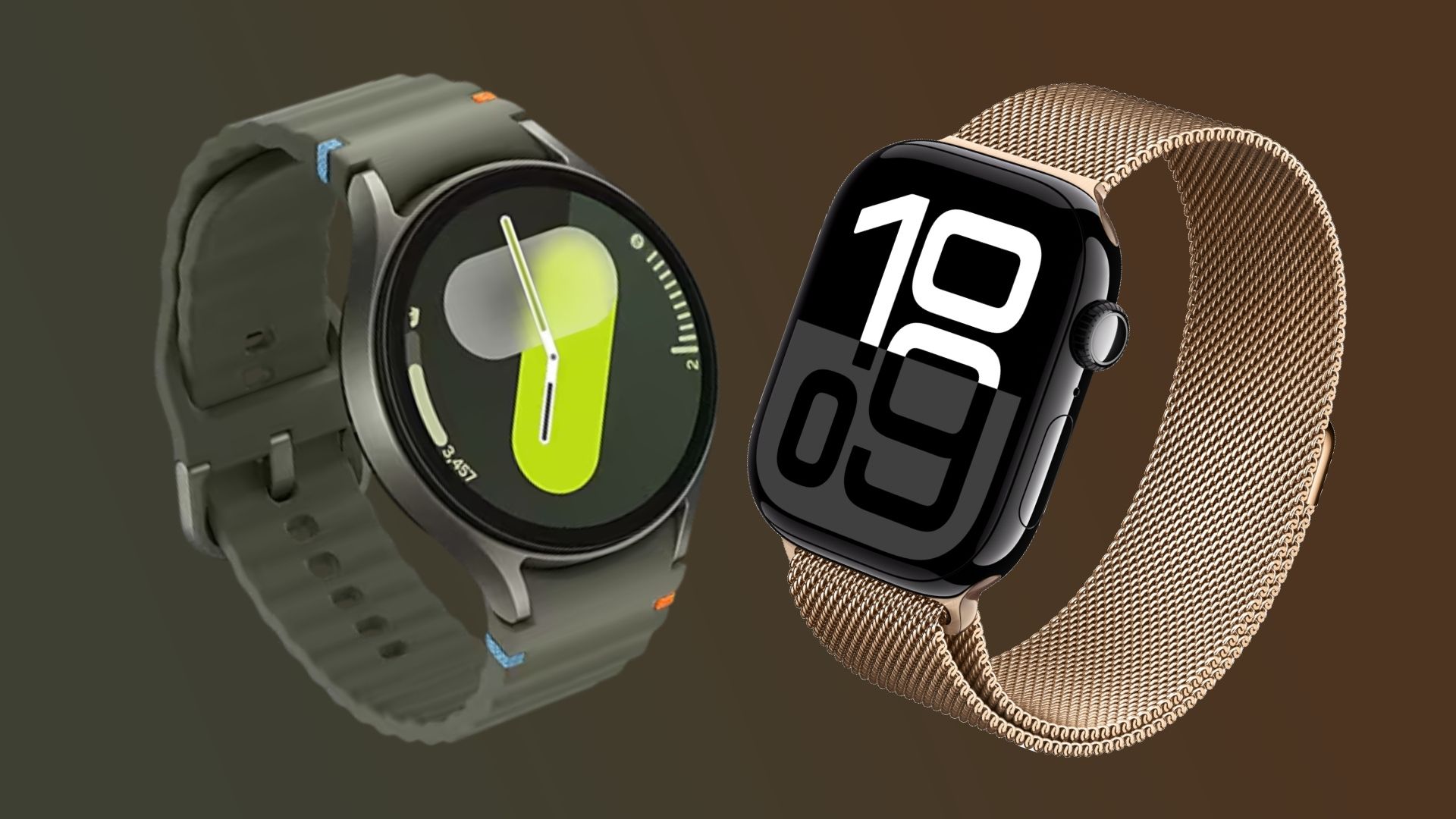
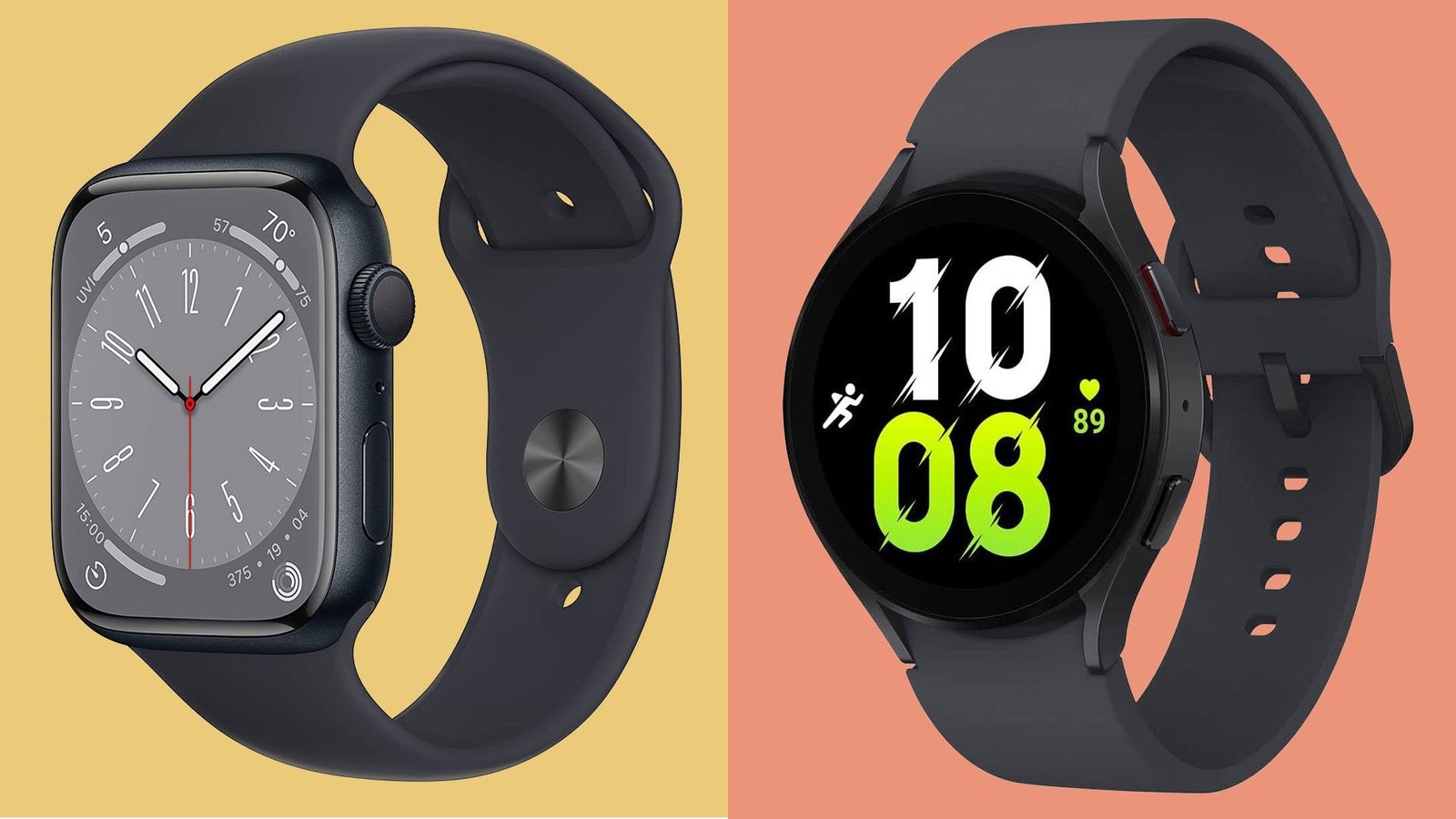
Clash of the Titans: Apple Watch Series 10 vs. Samsung Galaxy Watch 8 – The 2025 Head-to-Head
The smartwatch market, a vibrant nexus of technology, fashion, and personal health, continues its relentless march forward. At the forefront of this innovation race stand two behemoths: Apple and Samsung. Year after year, their flagship smartwatches push the boundaries of what a wrist-worn device can do. As we peer into the not-so-distant future of 2025, the anticipated Apple Watch Series 10 and Samsung Galaxy Watch 8 are poised to redefine wearable technology, offering a tantalizing glimpse into the next generation of personal computing.
This speculative head-to-head analysis delves into what these futuristic devices might bring to the table, examining their potential designs, performance, health capabilities, battery life, ecosystem integration, and the innovative features that could set them apart in the competitive landscape of 2025.
The Landscape of 2025: A Glimpse into the Future
By 2025, smartwatches are expected to transcend their current roles as mere notification hubs and fitness trackers. They will likely evolve into sophisticated health companions, indispensable personal assistants, and even vital communication devices, further blurring the lines between technology and the human body. The drive for miniaturization, enhanced sensor accuracy, extended battery life, and seamless AI integration will be paramount. Both Apple and Samsung, with their vast R&D capabilities, are uniquely positioned to lead this charge.
Design and Display: Form Meets Function
Apple Watch Series 10:
Building on a legacy of iconic design, the Apple Watch Series 10 in 2025 is expected to refine rather than revolutionize its aesthetic. While the core rectangular form factor is likely to remain, subtle but significant changes could emerge. We might see even slimmer bezels, allowing for a larger, more immersive display within a similar footprint. The use of more premium and durable materials, such as enhanced titanium alloys or even ceramic composites, could become standard across higher-end models, offering superior scratch resistance and a lighter feel.
The display technology itself will undoubtedly see significant advancements. While current LTPO OLED panels are impressive, 2025 could mark the widespread adoption of micro-LED technology for the Apple Watch. Micro-LED offers superior brightness, infinite contrast, and significantly improved power efficiency compared to OLED, potentially extending battery life even with an always-on display. The Series 10 could boast even higher refresh rates, making interactions incredibly fluid, and potentially incorporate advanced haptic feedback within the display itself for a more tactile experience. New watch band mechanisms or smart bands with integrated sensors could also be a subtle yet impactful innovation.
Samsung Galaxy Watch 8:
Samsung, known for its distinctive circular watch faces, will likely continue to champion this classic design, appealing to users who prefer a more traditional timepiece aesthetic. The Galaxy Watch 8 in 2025 is expected to further refine its signature rotating bezel – whether physical or haptic – which offers a unique and intuitive way to navigate the UI. Expect a focus on ruggedness, with advanced Gorilla Glass or Sapphire Crystal protection becoming standard, alongside enhanced water and dust resistance ratings (perhaps exceeding IP68).
Material choices could expand to include more eco-friendly recycled materials without compromising durability. The display will undoubtedly be a vibrant Super AMOLED panel, pushing brightness levels to new heights for better outdoor visibility, while maintaining excellent color accuracy and deep blacks. Samsung might also experiment with slightly larger display sizes, optimizing the circular screen real estate for more information at a glance. The integration of the physical rotating bezel, a beloved feature, will likely be perfected, perhaps offering even more granular control and haptic feedback.
Verdict on Design & Display:
Both watches will offer stunning, highly functional displays. The choice will largely come down to personal preference for form factor: Apple’s sleek rectangle or Samsung’s classic circle. Apple might gain an edge in display technology with earlier adoption of micro-LED, while Samsung will focus on refining its user-friendly bezel and robust build.
Performance and Operating System: The Brains Behind the Beauty
Apple Watch Series 10:
Powering the Apple Watch Series 10 will be a new generation of Apple’s custom-designed SiP (System in Package), likely dubbed the S10 or a similar nomenclature. This chip will be dramatically faster and more power-efficient than its predecessors, enabling complex on-device machine learning tasks crucial for advanced health monitoring and AI-driven features. Expect significant improvements in app launch times, UI responsiveness, and background processing.
watchOS 11 or 12, the operating system for the Series 10, will be a testament to Apple’s integrated ecosystem. It will feature even deeper integration with iOS, iPadOS, and macOS, providing seamless handoffs and universal continuity. AI will be woven throughout the OS, offering more proactive health insights, personalized workout recommendations, and context-aware smart notifications. Siri will become more conversational and capable of executing complex multi-step commands directly from the wrist. Customization options for watch faces are likely to expand significantly, allowing for dynamic, data-rich complications.
Samsung Galaxy Watch 8:
The Galaxy Watch 8 will likely be powered by a new generation of Samsung’s Exynos W series processor, optimized for Wear OS. This chip will focus on delivering smooth performance across a wider range of apps and services, along with improved power efficiency. Samsung’s collaboration with Google on Wear OS will bear further fruit, resulting in a highly optimized and feature-rich experience.
Wear OS 6 or 7 on the Galaxy Watch 8 will showcase Google’s ambition for smartwatches. Expect even tighter integration with Google services like Google Maps, Google Assistant, Google Wallet, and Google Fit. The app ecosystem will be robust, leveraging the vast Android developer community. AI will play a crucial role in personalized coaching, intelligent notifications, and predictive features. Enhanced multitasking capabilities and more intuitive navigation, perhaps building on the rotating bezel, will define the user experience. Samsung’s own One UI Watch overlay will continue to add its unique flair, offering exclusive features and a familiar interface for Galaxy users.
Verdict on Performance & OS:
Both will offer blazing-fast performance and highly capable operating systems. Apple will excel in its tightly integrated, polished ecosystem, while Samsung, through Wear OS, will offer broader Android compatibility and deeper Google service integration, appealing to a wider range of Android users.
Health and Fitness Tracking: The Ultimate Wellness Companion
This is where the 2025 smartwatches are expected to truly shine, moving beyond basic tracking to proactive health management.
Apple Watch Series 10:
Apple has historically led the charge in health innovation, and the Series 10 is poised to deliver groundbreaking features.
- Non-invasive Blood Glucose Monitoring: This is the "holy grail" of smartwatch health tech. While highly challenging, by 2025, Apple might finally introduce a truly non-invasive blood glucose sensor, revolutionizing diabetes management and general wellness. This would be a monumental achievement.
- Accurate Blood Pressure Monitoring: Beyond cuff-based measurements, the Series 10 could offer continuous or on-demand blood pressure readings from the wrist, providing invaluable data for cardiovascular health.
- Advanced Body Temperature Sensing: Building on existing skin temperature tracking, the Series 10 could offer more precise core body temperature measurements, useful for illness detection, fertility tracking, and workout optimization.
- Enhanced Sleep Analysis: More granular sleep stage tracking, identification of sleep apnea, and personalized recommendations for improving sleep quality.
- Mental Wellness: Deeper integration of mindfulness exercises, stress detection through heart rate variability, and guided breathing techniques, perhaps with biofeedback.
- Fitness: More sophisticated workout metrics, including advanced running dynamics, swimming stroke analysis, and AI-powered personalized coaching that adapts to recovery and performance.
Samsung Galaxy Watch 8:
Samsung, with its strong focus on fitness and holistic health, will also push boundaries.
- Non-invasive Blood Glucose & Blood Pressure: Samsung is also heavily invested in these areas. By 2025, they could offer competing solutions, potentially with slightly different methodologies.
- Improved Body Composition Analysis (BIA): Building on its existing BIA sensor, the Galaxy Watch 8 could offer even more accurate and frequent measurements of body fat, muscle mass, and body water.
- Continuous Skin Temperature: More robust and actionable insights from continuous temperature tracking, including early illness detection and ovulation tracking.
- Advanced ECG & SpO2: Enhanced accuracy and new features building on existing capabilities, perhaps detecting more types of arrhythmias or offering deeper insights into blood oxygen levels during sleep.
- Fitness Coaching: AI-powered adaptive workout programs, recovery advice, and detailed performance metrics across a wider range of sports, integrated with Samsung Health.
Verdict on Health & Fitness:
This will be the most fiercely contested battleground. Both companies are racing to deliver non-invasive glucose and accurate blood pressure monitoring. If either succeeds, it will be a game-changer. Apple might have a slight edge in regulatory approvals and a more comprehensive, integrated health platform, while Samsung could appeal to users who prioritize detailed fitness metrics and body composition analysis.
Battery Life: The Ever-Elusive Holy Grail
Battery life remains the Achilles’ heel for many smartwatches. By 2025, significant strides are expected, but multi-day battery life with all features active might still be a challenge.
Apple Watch Series 10:
With the potential for micro-LED displays and more efficient SiP architecture, the Series 10 could realistically achieve 36-48 hours of typical use on a single charge, with low-power modes extending it further for essential functions. Fast charging will undoubtedly improve, offering hours of use from just a few minutes of charging.
Samsung Galaxy Watch 8:
Samsung typically offers competitive battery life, sometimes leveraging slightly larger battery capacities in its bulkier models. The Galaxy Watch 8 could aim for similar 36-48 hour benchmarks, with highly optimized Wear OS and Exynos chips. Fast wireless charging will be a key feature, making quick top-ups convenient.
Verdict on Battery Life:
Both will likely offer incremental improvements, aiming for a full two days of typical use. Breakthroughs that deliver week-long battery life with full functionality are unlikely by 2025 but remains the ultimate goal for the industry.
Connectivity and Smart Features: Beyond the Wrist
Apple Watch Series 10:
- Enhanced Cellular: Broader 5G band support and improved power efficiency for standalone cellular use.
- Ultra-Wideband (UWB): Even more precise location tracking, seamless integration with smart home devices (unlocking doors, controlling lights), and potentially new ways to interact with other Apple devices or even finding lost items with pinpoint accuracy.
- Satellite Connectivity: Following the iPhone, the Series 10 could offer emergency satellite communication for calls and texts in areas without cellular service.
- Apple Pay: Continued dominance as a secure and convenient mobile payment solution.
- Smart Home Control: Deeper integration with HomeKit, allowing more granular control of smart devices directly from the wrist.
Samsung Galaxy Watch 8:
- Robust Cellular: Comprehensive 5G support for independent connectivity.
- Google Wallet/Pay: Seamless mobile payments through Google’s platform.
- SmartThings Integration: Excellent control over Samsung’s SmartThings ecosystem, allowing users to manage a wide range of smart home devices.
- Broader Android App Compatibility: Leveraging the vastness of the Google Play Store for Wear OS apps, offering a diverse range of third-party functionalities.
- Google Assistant: Enhanced voice control and smart assistant capabilities.
Verdict on Connectivity & Smart Features:
Both will offer robust cellular connectivity and mobile payment solutions. Apple will likely lead in UWB integration and potentially satellite communication, offering unique location-based features. Samsung will leverage its SmartThings ecosystem and Google’s broader services for comprehensive smart home and app experiences.
Ecosystem Integration: A Tale of Two Gardens
Apple Watch Series 10:
The Apple Watch Series 10 will continue to be the ultimate companion for iPhone users. Its seamless integration with the Apple ecosystem – from AirPods to HomePods, iCloud, and all Apple services – is its undeniable strength. Health data syncs effortlessly with the Health app, notifications are perfectly mirrored, and handoffs between devices are fluid. For those already entrenched in Apple’s world, the Series 10 offers an unparalleled level of cohesion and convenience. It’s a key part of Apple’s "walled garden," where every component works in perfect harmony.
Samsung Galaxy Watch 8:
The Galaxy Watch 8, running Wear OS, offers excellent integration with Samsung Galaxy smartphones and other Android devices. While it performs best with a Samsung phone (thanks to Samsung Health, SmartThings, and Bixby integration), its Wear OS foundation means it’s generally compatible with a broader range of Android devices than the Apple Watch is with non-iPhones. Google services are deeply integrated, making it an ideal choice for users who rely heavily on Google’s suite of apps. It represents a more open, yet still highly optimized, ecosystem for Android users.
Verdict on Ecosystem Integration:
This is a clear differentiator. If you’re an iPhone user, the Apple Watch is the logical choice due to its unmatched integration. If you’re an Android user, especially with a Samsung phone, the Galaxy Watch 8 will offer the most comprehensive and seamless experience within that ecosystem.
Innovation and The 2025 Landscape: Beyond the Obvious
Beyond the incremental improvements, 2025 could see radical shifts.
- AI as a Personal Health Coach: Both watches will likely leverage AI not just for data collection but for proactive health management, predicting potential issues, and offering personalized interventions.
- Advanced Biometrics: Beyond glucose and blood pressure, research into non-invasive alcohol monitoring, stress hormone detection, or even early cancer markers could gain traction, though commercial availability by 2025 is speculative.
- Sustainable Materials: A greater emphasis on recycled materials and eco-friendly manufacturing processes will become standard.
- Enhanced Privacy Controls: With more sensitive health data being collected, robust privacy features and user control over their data will be paramount.
Pricing and Value Proposition
Apple Watch Series 10:
Apple Watches typically command a premium price, reflecting their build quality, brand appeal, and advanced features. The Series 10 will likely start in the range of $400-$450 for the base model, with cellular, larger sizes, and premium materials (like titanium or potentially a new "Ultra" equivalent) pushing prices well above $800. The value proposition lies in its seamless integration, unparalleled software polish, and potential for groundbreaking health features.
Samsung Galaxy Watch 8:
Samsung generally offers a slightly more competitive price point. The Galaxy Watch 8 could start around $300-$350 for the base model, with Classic or Pro versions costing more. The value proposition is its versatility for Android users, strong fitness tracking, and robust Google services integration, often at a slightly more accessible price than Apple.
Conclusion: Who Wins in 2025?
In the speculative realm of 2025, both the Apple Watch Series 10 and Samsung Galaxy Watch 8 emerge as incredibly powerful and sophisticated wearable devices. There isn’t a single "winner" but rather two highly specialized contenders, each excelling in its niche.
- For the iPhone User: The Apple Watch Series 10 will remain the undisputed champion. Its seamless integration, intuitive watchOS, and likely first-to-market status for truly revolutionary health features (like non-invasive glucose) will make it an irresistible upgrade for those within the Apple ecosystem.
- For the Android User: The Samsung Galaxy Watch 8 will be the prime choice. Its elegant circular design, robust fitness tracking, deep integration with Google services, and strong performance within the broader Android ecosystem will make it the go-to wearable.
The real winners, ultimately, are the consumers. The intense competition between Apple and Samsung continues to drive innovation at a furious pace. By 2025, smartwatches will be more than just gadgets; they will be intelligent extensions of ourselves, proactively managing our health, simplifying our lives, and keeping us connected in ways we are only just beginning to imagine. The Series 10 and Galaxy Watch 8 will stand as monuments to this remarkable technological evolution.