Samsung Galaxy Watch 8 Classic vs. Google Pixel Watch 3: A Definitive Head-to-Head Review
The wearable technology market continues to evolve at a blistering pace, with smartwatches becoming increasingly sophisticated health companions and seamless extensions of our smartphones. At the forefront of this innovation are two tech giants: Samsung and Google. With the anticipated release of the Samsung Galaxy Watch 8 Classic and the Google Pixel Watch 3, consumers are once again faced with a tantalizing choice between two of the most advanced Wear OS devices on the horizon.
This comprehensive review delves deep into what we can expect from these two titans, comparing their anticipated design philosophies, performance capabilities, health and fitness tracking prowess, software experiences, battery life, and overall value proposition. While these devices are not yet officially released, this analysis is based on strong industry rumors, past product iterations, and logical advancements, providing an informed perspective for potential buyers.
1. Introduction: The Battle for Your Wrist
The smartwatch landscape is dominated by Apple’s formidable presence, but in the Android world, Samsung and Google are the primary contenders. Samsung, a veteran in the wearable space, has consistently offered feature-rich devices with a strong focus on design and ecosystem integration. Google, a relative newcomer with the Pixel Watch series, aims to deliver a pure Android wearable experience deeply integrated with Fitbit’s health tracking.
The Galaxy Watch 8 Classic is expected to uphold Samsung’s legacy of combining traditional watch aesthetics with cutting-edge smart features, potentially bringing back or refining its beloved physical rotating bezel. The Pixel Watch 3, on the other hand, is anticipated to refine Google’s minimalist design language, focusing on seamless Google services integration and enhanced Fitbit capabilities. This review aims to help you navigate the nuances and decide which powerhouse wearable might be the perfect fit for your wrist and lifestyle.
2. Design and Build Quality: Elegance vs. Modernity
Samsung Galaxy Watch 8 Classic:
True to its "Classic" moniker, the Galaxy Watch 8 Classic is expected to lean heavily into a timeless, elegant watch aesthetic. If history is any indication, it will likely feature a polished stainless steel or even titanium casing, offering a premium feel and robust durability. The defining characteristic, and a major differentiator for Samsung, is the anticipated return or refinement of the physical rotating bezel. This tactile navigation method is not only satisfying to use but also provides a distinct advantage in terms of intuitive interaction without obscuring the screen.
We anticipate multiple size options, likely a larger 47mm or 48mm variant alongside a more standard 43mm or 44mm, catering to different wrist sizes and preferences. The watch will likely boast a standard lug design, allowing for a wide array of interchangeable straps, from classic leather to sporty silicone, offering extensive customization. Water resistance (5ATM) and MIL-STD-810H durability certification are standard expectations, ensuring it can withstand daily wear and tear, including swims and rugged outdoor activities. The Classic model usually has a slightly thicker profile due to its robust build and bezel mechanism, but this contributes to its perceived quality and durability.
Google Pixel Watch 3:
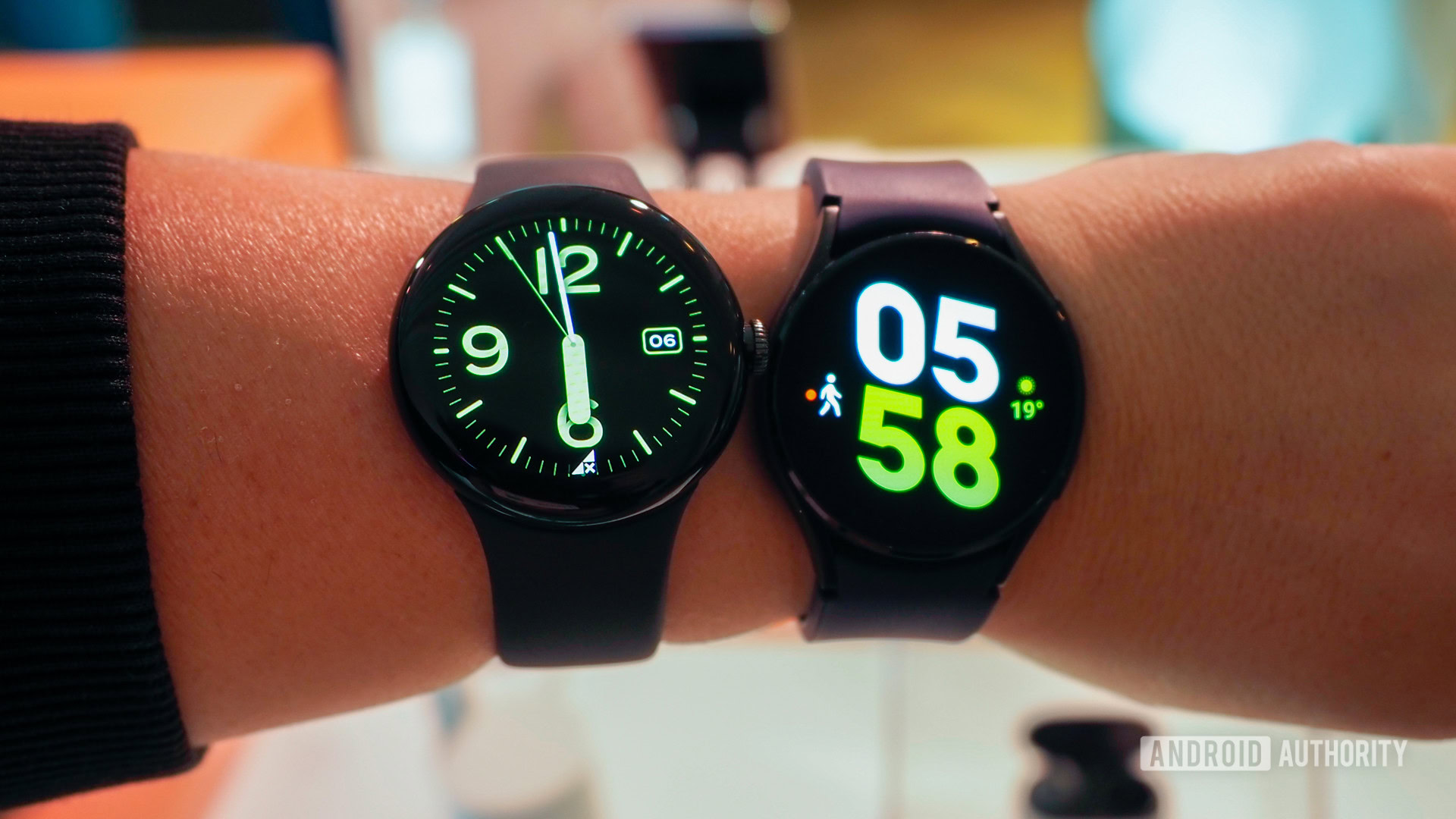
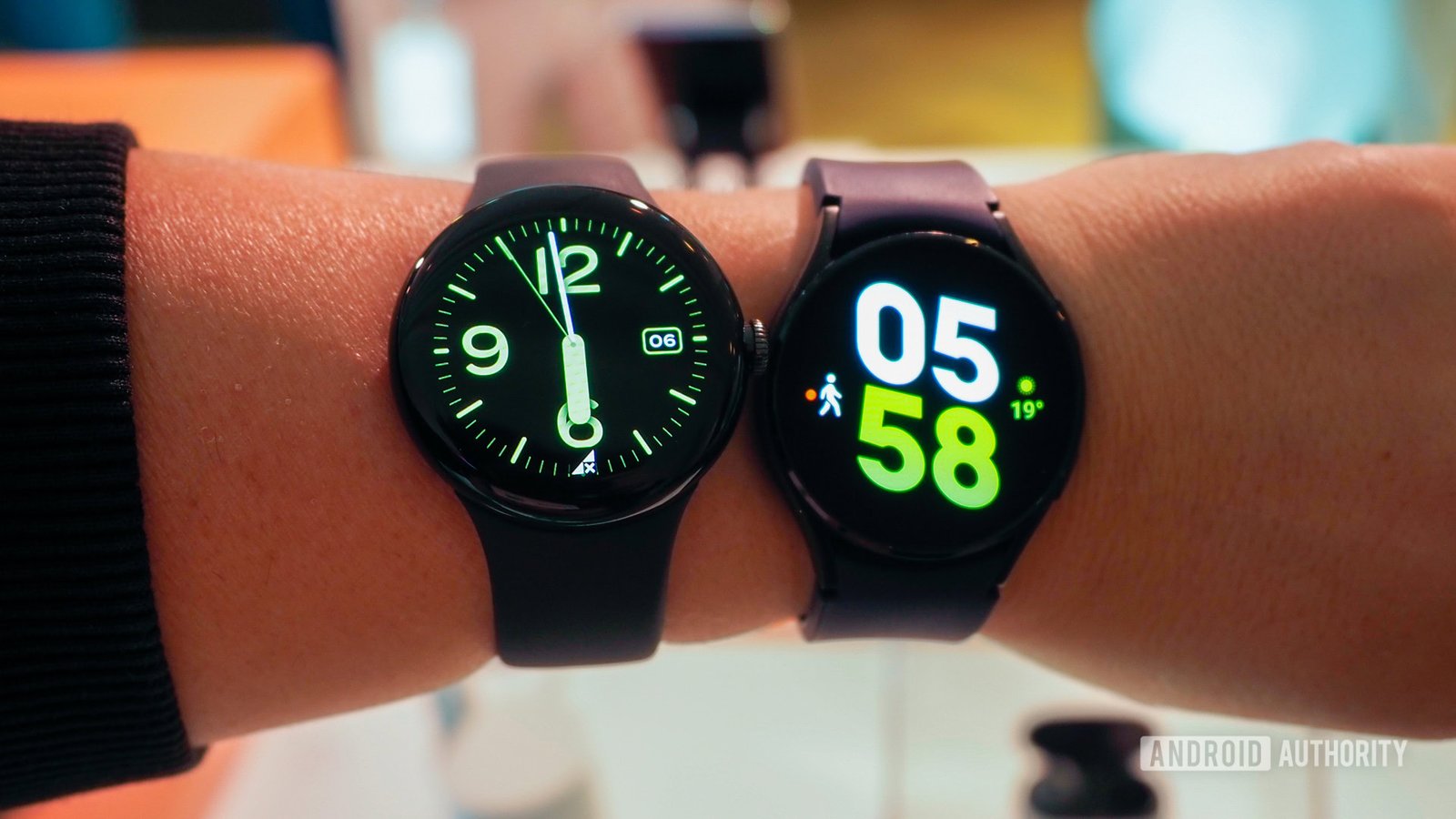
The Pixel Watch series has established a distinct design language: a sleek, pebble-like, domed glass aesthetic that seamlessly blends into the watch body. The Pixel Watch 3 is expected to refine this minimalist approach. While previous generations were limited to one size, strong rumors suggest Google might introduce a larger size option (e.g., 45mm alongside the standard 41mm), addressing a common request for a more substantial presence on the wrist and potentially larger battery.
The casing is likely to remain aluminum, possibly with a higher percentage of recycled materials, maintaining its lightweight and comfortable profile. The proprietary band attachment mechanism, while elegant, limits third-party strap options compared to standard lugs. However, Google’s first-party bands are typically high-quality and comfortable. The domed glass, while aesthetically pleasing, can be more susceptible to scratches if not adequately protected, though Gorilla Glass Victus or a similar durable material is expected. The Pixel Watch 3 will aim for a modern, understated elegance, prioritizing smooth curves and integrated design over traditional watch elements. Water resistance (5ATM) is also a given.
Design Verdict:
For those who appreciate the traditional look and feel of a mechanical watch combined with smart features, the Galaxy Watch 8 Classic with its physical bezel and premium materials will likely be the preferred choice. It offers a tangible interaction that enhances usability. The Pixel Watch 3, with its minimalist, modern, and potentially larger form factor, will appeal to users who favor sleek aesthetics, a less obtrusive design, and a focus on software-driven interactions.
3. Display: Clarity, Brightness, and Immersion
Samsung Galaxy Watch 8 Classic:
Samsung is renowned for its Super AMOLED displays, and the Galaxy Watch 8 Classic will undoubtedly showcase this expertise. Expect a vibrant, high-resolution panel with excellent contrast and deep blacks, making watch faces and app interfaces pop. The display will likely be slightly larger than its non-Classic counterpart, offering ample screen real estate. High peak brightness will ensure excellent outdoor readability, even under direct sunlight.
The Always-On Display (AOD) feature will be present, showing essential information without fully waking the screen, and Samsung’s AOD modes are typically very customizable and battery-efficient. The physical bezel, while reducing the screen-to-body ratio slightly compared to an edge-to-edge display, provides a protective lip and a functional element that many users prefer over purely touch-based interaction.
Google Pixel Watch 3:
The Pixel Watch 3 is expected to continue with a bright, circular AMOLED display, possibly with slightly thinner bezels than its predecessors. While the domed glass design is aesthetically pleasing, it does mean the usable screen area might feel slightly smaller than a flat-screen equivalent, particularly on the smaller model. Google prioritizes a fluid, responsive touch experience, and the display will likely offer excellent touch sensitivity and smooth animations.
Like Samsung, AOD will be a standard feature, allowing users to glance at the time and notifications without actively engaging the watch. Google’s displays are typically tuned for natural color reproduction and good visibility in various lighting conditions. The potential for a larger display size will significantly enhance the user experience, making text easier to read and interactions more precise.
Display Verdict:
Both watches will offer exceptional AMOLED displays. The Galaxy Watch 8 Classic might have a slight edge in sheer screen size and resolution, paired with the practical benefit of the physical bezel. The Pixel Watch 3 will offer a beautiful, seamless display experience that complements its minimalist design. The choice here largely depends on whether you prioritize screen real estate protected by a bezel or a more integrated, edge-to-edge (though slightly smaller) visual experience.
4. Performance: The Engine Room
Samsung Galaxy Watch 8 Classic:
Samsung is expected to power the Galaxy Watch 8 Classic with its next-generation Exynos W-series chip, likely the Exynos W940. This chip is rumored to be manufactured on a more efficient process (e.g., 3nm), promising significant improvements in processing power and, crucially, power efficiency. Coupled with a generous amount of RAM (likely 2GB or more) and ample internal storage (32GB or more), the Watch 8 Classic should offer a remarkably smooth and responsive user experience. App loading times, multi-tasking, and navigating complex watch faces should be virtually instantaneous. This enhanced performance will also be critical for future-proofing the device as Wear OS continues to evolve.
Google Pixel Watch 3:
Google’s Pixel Watch 3 is anticipated to feature a custom Tensor G3 Wearable chip, a dedicated version of the Tensor G3 found in Pixel phones. This chip is designed for tight integration with Wear OS and Google’s AI capabilities, potentially offering optimizations for machine learning tasks on the wrist. While the first two Pixel Watch generations used older Exynos chips, the shift to a dedicated Tensor variant signals Google’s commitment to delivering a truly optimized performance. RAM is expected to be at least 2GB, ensuring fluid performance, and storage should match Samsung’s 32GB for app and music storage. Google’s focus will be on delivering a consistently smooth and lag-free experience, leveraging its software expertise to compensate for any raw power differences.
Performance Verdict:
Both watches are expected to deliver top-tier performance for Wear OS devices. The Galaxy Watch 8 Classic’s anticipated Exynos W940 might offer a slight edge in raw processing power and efficiency due to its rumored advanced manufacturing process. However, the Pixel Watch 3’s Tensor G3 Wearable chip could provide superior optimization for Google’s specific software and AI features. In real-world usage, both should feel incredibly fast and responsive, making performance less of a decisive factor unless you’re benchmarking.
5. Software and User Experience: One UI Watch vs. Pure Wear OS
Both the Galaxy Watch 8 Classic and the Pixel Watch 3 will run on the latest version of Wear OS (likely Wear OS 5 based on Android 14). However, their user interfaces will offer distinct experiences.
Samsung Galaxy Watch 8 Classic (One UI Watch):
Samsung overlays Google’s Wear OS with its custom One UI Watch interface. This brings a familiar Samsung ecosystem feel to the wrist. One UI Watch is known for its extensive customization options, including a vast array of watch faces, custom widgets, and deeper integration with Samsung’s suite of apps (Samsung Health, Samsung Wallet, SmartThings). The physical rotating bezel acts as a primary navigation tool, allowing users to scroll through menus, notifications, and app lists with satisfying clicks. This tactile feedback enhances usability, especially when wearing gloves or during intense workouts.
Samsung also tends to add unique software features, such as advanced gesture controls, better multi-device connectivity within the Samsung ecosystem (e.g., seamless headphone switching), and Bixby voice assistant integration alongside Google Assistant. The app ecosystem is robust, with access to the Google Play Store for Wear OS and Samsung’s own app store for exclusive watch faces and apps.
Google Pixel Watch 3 (Pure Wear OS):
The Pixel Watch 3 will offer a "pure" or "stock-like" Wear OS experience, similar to Google’s Pixel phones. This means a clean, intuitive interface that prioritizes Google’s services. Navigation relies heavily on swipes, the digital crown, and the dedicated side button. Google Assistant is deeply integrated, offering seamless voice commands for search, smart home control, and more.
The Pixel Watch experience emphasizes Google’s core apps: Google Maps for navigation, Google Wallet for payments, Google Calendar, and YouTube Music for offline listening. Fitbit integration is paramount, with health and fitness data seamlessly flowing into the Fitbit app, offering a comprehensive and insightful health dashboard. The UI is designed to be fluid and visually appealing, with a focus on quick access to information and notifications. Google’s software updates are typically prompt and consistent, ensuring the latest features and security patches.
Software Verdict:
This is a significant differentiator. The Galaxy Watch 8 Classic with One UI Watch is ideal for users who prefer a feature-rich, highly customizable experience with tactile navigation and deep integration into the Samsung ecosystem. It offers more bells and whistles. The Pixel Watch 3 provides a streamlined, Google-centric experience, perfect for users who value simplicity, direct access to Google services, and the comprehensive Fitbit health platform.
6. Health and Fitness Tracking: Data-Rich vs. Insight-Driven
Both smartwatches will be packed with an array of sensors to monitor your health and fitness, but their approach to data presentation and insights differs significantly.
Samsung Galaxy Watch 8 Classic:
Samsung’s health tracking suite is one of the most comprehensive on the market. Expect the Galaxy Watch 8 Classic to feature:
- Optical Heart Rate Sensor (PPG): For continuous heart rate monitoring, high/low heart rate alerts, and irregular heart rhythm notifications.
- Electrocardiogram (ECG): On-demand ECG readings to detect signs of Atrial Fibrillation (AFib).
- Bioelectrical Impedance Analysis (BIA): Samsung’s unique sensor for measuring body composition (body fat percentage, skeletal muscle mass, body water, BMI) – a standout feature.
- Blood Oxygen (SpO2): On-demand and continuous blood oxygen monitoring, crucial for sleep tracking and overall respiratory health.
- Skin Temperature Sensor: For advanced sleep tracking insights, menstrual cycle tracking, and potentially early illness detection.
- Advanced Sleep Tracking: Detailed sleep stage analysis (awake, REM, light, deep), sleep score, snore detection (via paired phone), and sleep coaching programs.
- Stress Monitoring: Continuous stress tracking with guided breathing exercises.
- Workout Tracking: Automatic workout detection for common activities, support for over 100 different workout types, advanced running metrics, and GPS tracking.
- Fall Detection: Automatically alerts emergency contacts in case of a hard fall.
All this data is aggregated and presented within the Samsung Health app, which is robust, user-friendly, and offers detailed insights without requiring a paid subscription for core features.
Google Pixel Watch 3:
Google’s health and fitness tracking strategy revolves entirely around Fitbit. The Pixel Watch 3 will leverage Fitbit’s long-standing expertise in this domain, providing:
- Optical Heart Rate Sensor (PPG): Continuous heart rate monitoring, high/low heart rate alerts, and Irregular Heart Rhythm Notifications (IHRN) via ECG.
- Electrocardiogram (ECG): On-demand ECG for AFib detection.
- Blood Oxygen (SpO2): Overnight SpO2 tracking, and potentially on-demand.
- Skin Temperature Sensor: Primarily for sleep tracking insights and menstrual cycle tracking.
- Advanced Sleep Tracking: Detailed sleep stages, sleep score, restless sleep, and insights into sleep quality. Fitbit’s sleep tracking is highly regarded.
- Stress Management: Continuous Electrodermal Activity (EDA) sensor for stress detection and management, offering mindfulness exercises.
- Workout Tracking: Automatic exercise recognition, GPS for outdoor activities, Active Zone Minutes (Fitbit’s unique metric for intensity), and a wide range of workout modes.
- Daily Readiness Score: A Fitbit Premium feature that uses sleep, activity, and heart rate variability to tell you if you’re ready for a workout or need rest.
- Fall Detection: Expected to be included.
The data is seamlessly integrated into the Fitbit app, which is known for its user-friendly interface, motivational features, and community challenges. While basic features are free, many of Fitbit’s deeper insights, advanced metrics, and coaching programs are locked behind the Fitbit Premium subscription (often bundled with the watch for a trial period).
Health & Fitness Verdict:
Both watches are excellent health and fitness companions. The Galaxy Watch 8 Classic offers a broader array of sensors, notably the BIA for body composition, and provides all core features without a subscription. It’s ideal for those who want comprehensive raw data and prefer Samsung’s ecosystem. The Pixel Watch 3, with its deep Fitbit integration, excels at providing actionable insights and a more guided, holistic approach to wellness, especially with Fitbit Premium. If you’re already a Fitbit user or prioritize guided health journeys, the Pixel Watch 3 might be more appealing despite the potential subscription cost.
7. Battery Life: The Ever-Elusive Goal
Battery life remains a critical battleground for smartwatches, with daily charging still being the norm for many full-featured devices.
Samsung Galaxy Watch 8 Classic:
Samsung has been steadily improving battery life with each generation. The Galaxy Watch 8 Classic, particularly the larger model, is expected to house a significant battery, potentially leveraging the efficiency of the new Exynos W940 chip. We can anticipate reliable multi-day battery life (e.g., 2-3 days) with moderate use, and at least a full day (24+ hours) with heavy use, including GPS workouts and AOD. Fast charging and wireless charging (Qi standard) will be standard, making it convenient to top up.
Google Pixel Watch 3:
Battery life has been a point of contention for previous Pixel Watch generations, often struggling to consistently hit a full 24 hours with AOD and heavy use. Google is acutely aware of this. The Pixel Watch 3, especially if a larger size is introduced, is expected to feature a substantially larger battery capacity. Combined with the anticipated efficiency of the Tensor G3 Wearable chip and Wear OS optimizations, Google will aim for a consistent 24-hour-plus battery life, perhaps even pushing towards 36 hours for lighter users. Fast charging via USB-C will also be a priority.
Battery Life Verdict:
The Galaxy Watch 8 Classic is likely to offer superior battery life, building on Samsung’s already strong performance and the efficiency of its new chip. It might consistently deliver 24-48 hours depending on usage. The Pixel Watch 3 is expected to see significant improvements, but it might still play catch-up, aiming for a reliable 24+ hours. If extended battery life is a top priority, Samsung will likely have the edge.
8. Connectivity and Smart Features: Beyond Health
Common Features (Both):
- LTE Connectivity (Optional): Both will offer cellular variants, allowing calls, texts, and data streaming without your phone nearby.
- GPS: Multi-band GPS for accurate location tracking during outdoor activities.
- NFC: For contactless payments via Google Wallet (Pixel) or Samsung Wallet (Samsung).
- Bluetooth & Wi-Fi: Standard connectivity for headphones, phone pairing, and internet access.
- Microphone & Speaker: For calls, voice assistant interactions, and media playback.
- Emergency SOS: Features for contacting emergency services.
Samsung Galaxy Watch 8 Classic Specifics:
- Samsung Wallet: Seamless mobile payments, often with broader bank support in some regions.
- Bixby & Google Assistant: Choice of voice assistants.
- SmartThings Integration: Control Samsung smart home devices directly from your wrist.
- Find My Phone/Watch: Locate misplaced devices within the Samsung ecosystem.
- Camera Controller: Remotely control your Samsung phone’s camera.
- Deeper Samsung Phone Integration: Features like Smart Switch for easy setup, and seamless connectivity with Samsung headphones.
Google Pixel Watch 3 Specifics:
- Google Wallet: Seamless mobile payments, tightly integrated with your Google account.
- Google Assistant: Primary voice assistant, optimized for Google services.
- Deep Google Apps Integration: Optimized versions of Google Maps, Calendar, Gmail, YouTube Music, etc., for the watch.
- Find My Device: Locate your Pixel phone or other Android devices.
- Smart Home Control: Seamless control of Google Home/Nest devices.
- Fast Pair: Quick and easy pairing with Pixel Buds and other Android headphones.
Connectivity & Smart Features Verdict:
Both watches are fully capable smart devices. Your choice here largely depends on your existing smartphone and smart home ecosystem. If you’re deeply entrenched in the Samsung ecosystem, the Galaxy Watch 8 Classic offers unparalleled integration. If you prefer a pure Google experience and use Pixel phones or Google’s smart home devices extensively, the Pixel Watch 3 will feel like a natural extension.
9. Price and Value Proposition
Pricing for both devices is speculative, but we can infer from previous generations:
Samsung Galaxy Watch 8 Classic:
Given its "Classic" branding, premium materials, and expected advanced features, the Galaxy Watch 8 Classic will likely be positioned at the higher end of the Wear OS market.
- Estimated Price: Starting around $399 – $449 for the Bluetooth model, with LTE variants adding an extra $50-$70.
- Value: It offers a comprehensive package with a traditional watch aesthetic, a unique physical bezel, a vast array of health sensors (including BIA), and deep integration for Samsung users, all without requiring a recurring subscription for core health features.
Google Pixel Watch 3:
The Pixel Watch has consistently been priced competitively for a premium Wear OS device, often positioning itself against the higher-end Apple Watches.
- Estimated Price: Starting around $349 – $399 for the Bluetooth model, with LTE variants similarly priced.
- Value: It offers a sleek, modern design, a pure Wear OS experience, and unparalleled Fitbit integration. However, the true value of its health features is often unlocked by a Fitbit Premium subscription, which is an ongoing cost. It’s an excellent choice for Android users, especially Pixel owners, who want a tightly integrated Google experience.
Price & Value Verdict:
The Galaxy Watch 8 Classic might come in slightly more expensive, but it potentially offers more out-of-the-box features (like BIA) without a subscription. The Pixel Watch 3 could be slightly more affordable upfront, but users should factor in the cost of Fitbit Premium if they want to maximize its health tracking potential. The "value" ultimately depends on whether you prioritize a comprehensive feature set included in the purchase price or a more guided, subscription-based health experience.
10. Pros and Cons (Anticipated)
Samsung Galaxy Watch 8 Classic
Pros:
- Premium, traditional watch design with robust materials.
- Highly intuitive and satisfying physical rotating bezel.
- Comprehensive health tracking suite, including unique BIA sensor.
- Excellent battery life (anticipated).
- Deep integration with Samsung’s ecosystem (phones, SmartThings, Samsung Pay).
- One UI Watch offers extensive customization and features.
- All core health features are free, no subscription required.
Cons:
- Potentially higher price point.
- Thicker and heavier profile compared to the Pixel Watch.
- Bixby voice assistant might not be preferred by all.
- Less "pure" Wear OS experience due to Samsung’s overlay.
Google Pixel Watch 3
Pros:
- Sleek, minimalist, modern design (especially if larger size option is added).
- Pure, unadulterated Wear OS experience, optimized for Google services.
- Deep and insightful Fitbit integration for health and fitness.
- Prompt software updates directly from Google.
- Seamless integration with Pixel phones and Google ecosystem.
- Potentially more affordable upfront cost.
Cons:
- Battery life might still lag behind Samsung (though improved).
- Fitbit Premium subscription required for advanced health insights.
- Proprietary band attachment limits strap choices.
- No physical rotating bezel (relies on digital crown and touch).
- Domed glass design might be more prone to accidental damage.
11. Who Should Buy Which?
Choose the Samsung Galaxy Watch 8 Classic if:
- You prefer a traditional watch aesthetic with premium materials and a physical rotating bezel.
- You own a Samsung Galaxy smartphone and want seamless ecosystem integration.
- You desire the most comprehensive array of health sensors, including body composition analysis (BIA).
- You want all your core health and fitness data insights without a recurring subscription.
- You prioritize excellent battery life and robust performance.
- You enjoy extensive customization options for your watch face and UI.
Choose the Google Pixel Watch 3 if:
- You prefer a modern, minimalist, and sleek smartwatch design.
- You own a Google Pixel smartphone or prefer a "pure" Android experience.
- You are an existing Fitbit user or value Fitbit’s insightful, guided approach to health and fitness.
- You want deep integration with Google services like Google Assistant, Maps, and Wallet.
- You appreciate prompt software updates and a clean, intuitive Wear OS interface.
- You don’t mind a potential recurring subscription for the most advanced health features.
12. Conclusion: A Choice of Philosophy
The anticipated Samsung Galaxy Watch 8 Classic and Google Pixel Watch 3 represent the pinnacle of Wear OS smartwatches, each catering to slightly different philosophies and user preferences.
The Samsung Galaxy Watch 8 Classic is poised to be the ultimate all-rounder: a beautifully crafted, feature-packed wearable that seamlessly blends classic watch design with cutting-edge technology. Its physical rotating bezel, comprehensive health suite (especially BIA), and strong battery life make it a compelling choice for those who want a premium, versatile device that does it all, particularly if they are already invested in the Samsung ecosystem.
The Google Pixel Watch 3, on the other hand, will likely refine Google’s vision of a minimalist, integrated, and intelligent wearable. Its strength lies in its seamless Google services integration, the powerful Fitbit health platform, and a clean, user-friendly Wear OS experience. It’s the ideal choice for Android purists, Pixel phone owners, and anyone who prioritizes insightful, guided health tracking from Fitbit.
Ultimately, the "better" watch depends entirely on your individual priorities. Both are expected to be stellar devices, pushing the boundaries of what’s possible on your wrist. Your decision will come down to whether you lean towards Samsung’s feature-rich, classic-inspired versatility or Google’s streamlined, deeply integrated, and modern approach. Whichever you choose, you’ll be getting a top-tier smartwatch capable of enhancing your daily life, health, and connectivity.