Okay, here’s a comprehensive 2000-word comparison review between the Google Pixel Watch 3 and the Apple Watch Series 10, written in English. Please note that both devices are yet to be officially announced, so this review is based on current trends, expected improvements, and common rumors surrounding their development.
The Smartwatch Titans Clash: Google Pixel Watch 3 vs. Apple Watch Series 10 – A Definitive Comparison Review
The smartwatch market, once a niche filled with novelty gadgets, has matured into a cornerstone of personal technology. These wrist-worn computers have evolved from mere notification mirrors to sophisticated health guardians, fitness coaches, and seamless extensions of our digital lives. At the forefront of this evolution stand two titans: Google and Apple. As we anticipate the release of their next-generation flagships – the Google Pixel Watch 3 and the Apple Watch Series 10 – the stage is set for a monumental showdown.
This in-depth comparison will dissect every facet of these highly anticipated devices, from their design philosophies and display technologies to their performance, operating systems, health tracking capabilities, battery life, and ecosystem integration. Our goal is to provide a comprehensive analysis that empowers you to make an informed decision, understanding which smartwatch aligns best with your needs, your lifestyle, and your primary smartphone ecosystem.
I. Introduction: A Battle for Your Wrist
For years, the Apple Watch has dominated the premium smartwatch segment, setting benchmarks for design, functionality, and health tracking. Its tight integration with iOS has created an unparalleled user experience for iPhone owners. However, Google’s entry with the Pixel Watch series marked a significant turning point for the Android ecosystem. By combining Google’s software prowess with Fitbit’s established health tracking, the Pixel Watch aims to offer a truly compelling alternative.
The Pixel Watch 3 is expected to build upon the foundations laid by its predecessors, addressing previous criticisms and refining its offering. Similarly, the Apple Watch Series 10 (potentially celebrating an anniversary with significant upgrades, or simply continuing its iterative refinement) is poised to push the boundaries of wearable technology even further. This review will explore how these two devices stack up, highlighting their strengths, weaknesses, and unique selling propositions.
II. Design and Aesthetics: Form Factor Philosophy
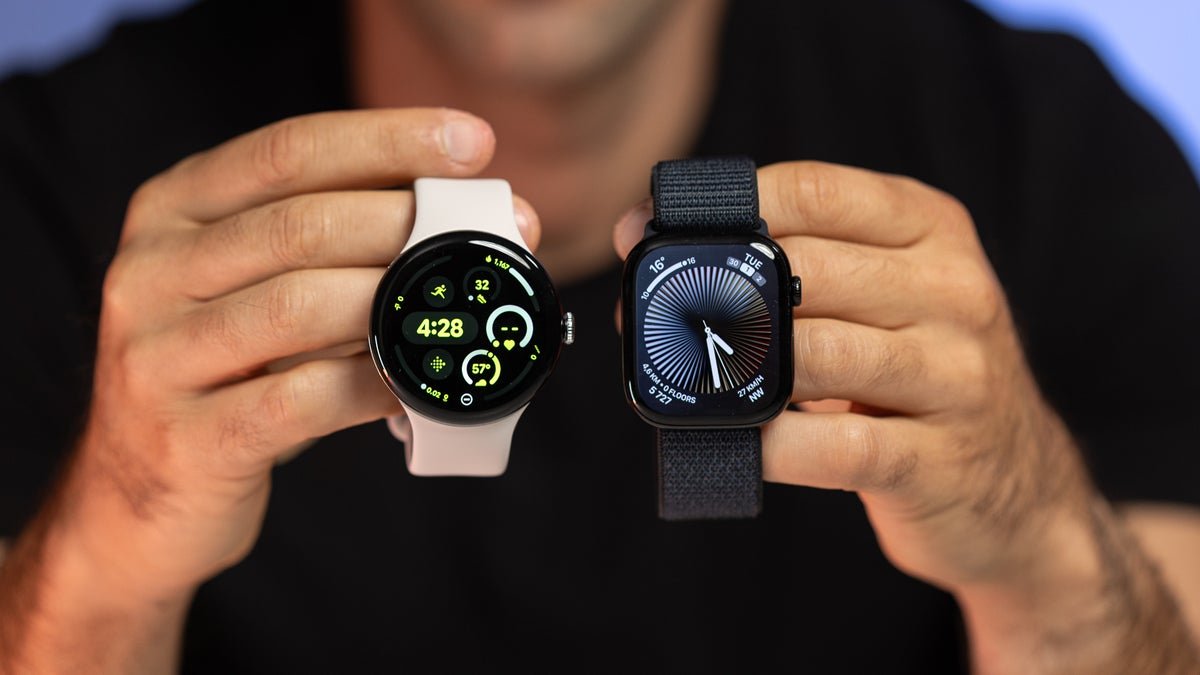
The immediate visual distinction between the Pixel Watch 3 and the Apple Watch Series 10 lies in their fundamental design philosophies: circular versus rectangular.
Google Pixel Watch 3:
The Pixel Watch series has embraced a distinctive, minimalist, and pebble-like circular design. This aesthetic choice is often lauded for its resemblance to traditional watches, making it a more natural fit for those who prefer classic horology. The Pixel Watch 3 is expected to retain this signature look, likely featuring a domed glass that seamlessly blends into the highly polished casing. Material choices will likely include a premium aluminum or stainless steel, offering a refined feel on the wrist. Google’s design language emphasizes smooth curves and a streamlined profile, reducing visual clutter and creating an elegant, understated presence. The physical crown, a hallmark of the Pixel Watch, is both a design element and a crucial navigation tool, offering tactile feedback that enhances the user experience. The band attachment mechanism is unique, offering a quick-release system that makes swapping bands intuitive, though it requires proprietary bands. This design caters to users who appreciate a modern yet timeless look and feel.
Apple Watch Series 10:
In contrast, the Apple Watch Series 10 will undoubtedly continue Apple’s iconic rectangular design. This shape, while less traditional, has proven incredibly effective for displaying information, offering more screen real estate for text, app icons, and complex data visualizations. Over the years, Apple has refined the edges, making them softer and more integrated with the display, and the Series 10 is expected to further polish this design. Material options will likely span aluminum (most common), stainless steel (premium), and potentially titanium (for durability and lightness), offering a range of price points and aesthetic preferences. The Digital Crown and side button are staples, providing precise navigation and quick access to features. Apple’s band system is universally praised for its vast array of first-party and third-party options, and its simple yet secure attachment mechanism. The rectangular form factor allows for a more utilitarian approach to screen usage, optimized for apps and widgets that display multiple pieces of information simultaneously.
Comparison:
The choice between circular and rectangular is deeply personal. The Pixel Watch 3 offers a more classic watch aesthetic, appealing to those who want their smartwatch to blend seamlessly with traditional timepieces. The Apple Watch Series 10, with its rectangular display, prioritizes information density and app usability. Both are expected to feature premium build quality and attention to detail. The Pixel Watch’s proprietary band system might limit choices compared to the Apple Watch’s expansive ecosystem of interchangeable straps.
III. Display Technology: Clarity, Brightness, and Durability
A smartwatch’s display is its window to your digital world, and both Google and Apple are expected to equip their flagships with cutting-edge screen technology.
Google Pixel Watch 3:
The Pixel Watch 3 is anticipated to feature a vibrant AMOLED display, likely with an "Always-On Display" (AOD) capability. Given its circular form, the resolution will be optimized for round content, delivering sharp text and rich colors. Improvements are expected in peak brightness, ensuring excellent legibility even in direct sunlight. The domed glass, while aesthetically pleasing, could potentially be more susceptible to glare or reflections than a flatter surface. Durability will likely be addressed with stronger glass, perhaps a variant of Gorilla Glass or a custom-engineered solution, to resist scratches and minor impacts.
Apple Watch Series 10:
The Apple Watch Series 10 will undoubtedly feature Apple’s renowned Retina LTPO OLED display. This technology allows for dynamic refresh rates, enabling the Always-On Display feature to be incredibly power-efficient. Apple’s displays are known for their exceptional brightness (often reaching 2000 nits or more), true blacks, and accurate color reproduction. The Series 10 is expected to continue with edge-to-edge displays, maximizing screen real estate within its form factor. Durability is a key focus for Apple, with Ion-X glass on aluminum models and Sapphire crystal on stainless steel and titanium models, providing superior scratch resistance. The flat or subtly curved edges also contribute to a robust feel.
Comparison:
Both watches will offer stunning, vibrant displays suitable for all lighting conditions. Apple’s LTPO technology might give it a slight edge in power efficiency for its AOD, and its peak brightness figures often surpass competitors. Apple’s focus on Sapphire crystal for premium models also offers a clear advantage in scratch resistance for those willing to pay the premium. The Pixel Watch 3’s curved glass, while beautiful, might present more reflections.
IV. Under the Hood: Performance and Hardware
Smooth performance is paramount for a seamless smartwatch experience, from quick app launches to fluid animations and responsive health tracking.
Google Pixel Watch 3:
Google is expected to significantly upgrade the processor in the Pixel Watch 3. Previous Pixel Watches have utilized older Samsung Exynos chips, which, while capable, lagged behind Apple’s custom silicon. For the Pixel Watch 3, we anticipate a newer, more efficient Wear OS-optimized chipset, possibly a custom Tensor-branded chip or a modern Qualcomm Snapdragon W5+ Gen 2. This upgrade would translate into noticeably faster app loading, smoother navigation, and improved power efficiency. More RAM and storage would also contribute to a snappier experience and allow for more offline content. Improved haptic feedback is also a possibility, enhancing the tactile interactions.
Apple Watch Series 10:
Apple’s S-series chips are consistently a generation ahead of the competition in terms of raw performance and power efficiency. The Apple Watch Series 10 will likely feature the next iteration of this custom silicon (e.g., S10 chip), delivering unrivaled speed and fluidity. Apple’s integrated approach to hardware and software optimization allows for incredibly efficient performance, enabling complex computations for health metrics and demanding apps without significant battery drain. The W-series chip for wireless connectivity and the U-series chip for Ultra Wideband (Precision Finding) will also see iterative improvements, enhancing connectivity and location accuracy.
Comparison:
Apple has historically held a significant lead in raw processing power and optimization, leading to an incredibly fluid user experience. While the Pixel Watch 3 is expected to close this gap considerably with a new processor, it remains to be seen if it can match Apple’s years of refinement in silicon design for wearables. Both will offer excellent day-to-day performance, but the Apple Watch might maintain its edge in computationally intensive tasks or future-proofing for more demanding applications.
V. Operating Systems: Wear OS vs. watchOS – The Software Soul
The operating system defines the user experience, app ecosystem, and overall utility of a smartwatch. This is where Google and Apple diverge most significantly.
Wear OS (Google Pixel Watch 3):
The Pixel Watch 3 will run the latest version of Wear OS (likely Wear OS 5). This platform, under Google’s stewardship, has undergone a massive transformation, becoming far more capable and intuitive. Key features include:
- Deep Google Integration: Seamless access to Google Assistant, Google Maps (with turn-by-turn navigation on your wrist), Google Wallet for contactless payments, and Gmail notifications.
- Fitbit Integration: This is a cornerstone. Wear OS leverages Fitbit’s robust health and fitness tracking capabilities, offering detailed insights into activity, sleep, stress, and readiness.
- Google Play Store: A growing library of apps designed for the wrist, though still smaller than Apple’s.
- Customization: Extensive watch face options and complications.
- Notification Management: Smart replies, quick actions, and clear notification display.
- Cross-Device Continuity: Expected improvements in how the watch interacts with other Android devices and Google services.
watchOS (Apple Watch Series 10):
The Apple Watch Series 10 will run the newest iteration of watchOS (likely watchOS 11). watchOS is renowned for its polish, intuitive interface, and deep integration with the iOS ecosystem. Key features include:
- Seamless iOS Integration: Unparalleled connectivity with iPhone, including Handoff, AirPlay, and shared data across Apple services.
- Vast App Ecosystem: The most mature and extensive app store for smartwatches, with many highly optimized applications.
- Siri: Robust voice assistant capabilities for commands, queries, and smart home control.
- Apple Pay: Secure and convenient contactless payments.
- Sophisticated Health Metrics: Detailed health and fitness tracking, with a strong emphasis on data visualization and actionable insights.
- Safety Features: Industry-leading features like Fall Detection, Crash Detection, Emergency SOS, and International Emergency Calling.
- Family Setup: Allows users without an iPhone to use an Apple Watch (cellular model), connecting to a family member’s iPhone.
Comparison:
watchOS remains the gold standard for fluidity, app availability, and deep ecosystem integration, especially for iPhone users. Its safety features are unparalleled. Wear OS, however, has made tremendous strides, particularly with Fitbit’s health expertise and Google’s core services. For Android users, the Pixel Watch 3 offers the most cohesive and feature-rich Wear OS experience. The choice here is largely dictated by your primary smartphone.
VI. Health and Fitness Tracking: Your Personal Wellness Coach
This is arguably the most critical battleground for modern smartwatches. Both devices are expected to be comprehensive health and fitness trackers, but their approaches and unique features will differ.
Google Pixel Watch 3 (with Fitbit):
Leveraging Fitbit’s extensive expertise, the Pixel Watch 3 is poised to be an excellent health and fitness companion for Android users. Expected features include:
- Heart Rate Monitoring: Continuous and accurate tracking.
- ECG (Electrocardiogram): On-demand readings to detect signs of Atrial Fibrillation (AFib).
- Blood Oxygen (SpO2): Overnight and on-demand measurements.
- Advanced Sleep Tracking: Detailed insights into sleep stages, sleep score, and trends.
- Stress Management: EDA (Electrodermal Activity) sensor for stress detection and mindfulness exercises.
- Daily Readiness Score: A Fitbit Premium feature that assesses your recovery and suggests optimal activity levels.
- Comprehensive Workout Tracking: GPS tracking for outdoor activities, automatic workout detection, and a wide range of exercise modes.
- Potential New Sensors: Rumors suggest potential for skin temperature sensing, or even non-invasive blood pressure or glucose monitoring, though the latter two are highly speculative for a consumer device in 2024.
- Fitbit App Integration: All data seamlessly syncs to the comprehensive Fitbit app, offering long-term trends and guided programs.
Apple Watch Series 10:
The Apple Watch has consistently pushed the envelope in health tracking, often partnering with medical institutions for research. The Series 10 will likely refine existing features and potentially introduce groundbreaking new ones:
- Heart Rate Monitoring: Highly accurate, with high/low heart rate notifications and irregular rhythm notifications.
- ECG (Electrocardiogram): Similar to the Pixel Watch, for AFib detection.
- Blood Oxygen (SpO2): On-demand and background measurements.
- Advanced Sleep Tracking: Focuses on sleep stages and consistency, though perhaps less detailed than Fitbit’s.
- Temperature Sensing: Introduced in Series 8, primarily for retrospective ovulation estimates in women and more accurate sleep tracking.
- Comprehensive Workout Tracking: Extensive metrics, customizable workout views, and advanced running dynamics.
- Fall Detection & Crash Detection: Critical safety features that can automatically alert emergency services.
- Emergency SOS: Allows users to quickly call for help.
- Medication Tracking: Helps users remember to take their medications.
- Mental Health Tracking: Features like reflective journaling and state of mind logging.
- Rumored Features: Persistent rumors suggest non-invasive blood pressure monitoring and potentially even glucose monitoring, though these are complex and might still be several years away for a mass-market product.
Comparison:
Both watches are exceptional health and fitness companions. Fitbit’s strength on the Pixel Watch lies in its holistic wellness approach, particularly with detailed sleep insights, stress management, and the Daily Readiness Score. Apple Watch, on the other hand, excels in its emphasis on safety features (Fall/Crash Detection, Emergency SOS) and its more medically oriented data collection, often used in research. For general fitness, both are excellent, but Apple’s robust app ecosystem might offer more specialized third-party workout apps. If groundbreaking new sensors like BP or glucose monitoring materialize, it would be a game-changer for whichever device introduces them first.
VII. Battery Life and Charging: Endurance on Your Wrist
Battery life remains a common pain point for smartwatches, and both companies are under pressure to deliver improvements.
Google Pixel Watch 3:
Battery life has been a point of criticism for previous Pixel Watch models, often requiring daily charging. The Pixel Watch 3 is expected to address this with a larger battery capacity and the more efficient new processor. While multi-day battery life with Always-On Display and extensive health tracking might still be a stretch, Google aims for a comfortable 24-hour-plus experience, ideally pushing towards 36 hours for lighter users. Fast charging will also be crucial to minimize downtime.
Apple Watch Series 10:
Apple has largely stuck to an "all-day" battery life (around 18 hours with AOD and standard usage) for its main line, with the Ultra model offering multi-day endurance. The Series 10 is expected to maintain or slightly improve upon this, leveraging the efficiency of its LTPO display and new S-series chip. While a significant leap to multi-day battery life for the standard model is unlikely, optimized power management and faster charging (already quite good) will be key. A low-power mode extends usage to 36+ hours by disabling some features.
Comparison:
Historically, neither has been a multi-day battery champion (excluding the Apple Watch Ultra). The Pixel Watch 3 has more ground to gain, and if it can reliably offer 24+ hours of heavy usage, it would be a significant win. Apple Watch Series 10 will likely stick to its "all-day" promise, relying on its efficient charging to top up quickly. For serious multi-day endurance, users would still need to look at specialized fitness trackers or Apple Watch Ultra.
VIII. Ecosystem Integration and Connectivity
A smartwatch’s true power comes from its seamless integration with your wider digital ecosystem.
Google Pixel Watch 3:
The Pixel Watch 3 is designed for the Android ecosystem. It will offer:
- Seamless Android Pairing: Quick and easy setup with any Android smartphone (though best optimized for Pixel phones).
- Google Services: Deep integration with Google Assistant, Google Maps, Google Wallet, Gmail, Calendar, and Google Home for smart home control.
- Cross-Device Continuity: Improved handoff between your Pixel phone, Pixel Buds, and Pixel Watch for calls, media, and notifications.
- Connectivity: Expected to come in Wi-Fi/Bluetooth and LTE variants, allowing for untethered calls, texts, and streaming. GPS is standard for location tracking.
Apple Watch Series 10:
The Apple Watch is exclusively designed for iPhone users, offering unparalleled integration:
- iPhone Exclusive: It requires an iPhone to set up and manage, creating a highly cohesive but walled-garden experience.
- Apple Services: Deep integration with Apple Pay, Siri, Apple Music, Maps, Calendar, Messages, and iCloud.
- Seamless Hand-off: Unmatched continuity for calls, messages, and app activity between your iPhone, Apple Watch, AirPods, and other Apple devices.
- Find My Network: Leveraging the Find My network for locating misplaced devices.
- Family Setup: A unique feature allowing family members without an iPhone to use a cellular Apple Watch managed by another iPhone.
- Connectivity: Available in GPS (Wi-Fi/Bluetooth) and GPS + Cellular models, offering true independence from the iPhone for calls, texts, and data. Ultra Wideband (UWB) for precise finding of compatible devices.
Comparison:
This is perhaps the most significant differentiator. If you own an iPhone, the Apple Watch Series 10 offers an unmatched, almost invisible integration that enhances every aspect of your digital life. If you’re an Android user, the Pixel Watch 3 will provide the most optimized and feature-rich Wear OS experience, seamlessly connecting you to Google’s vast ecosystem. There is no cross-compatibility – an Apple Watch won’t work with Android, and a Pixel Watch won’t work with iOS.
IX. Pricing and Value Proposition
The cost of these premium smartwatches reflects their advanced technology and capabilities.
Google Pixel Watch 3:
Google typically positions the Pixel Watch competitively within the premium Android segment. We can expect the Pixel Watch 3 to start in a similar range to its predecessors, likely around $349-$399 for the Wi-Fi model, with the LTE version adding another $50-$100. The value proposition lies in offering a truly premium, Google-designed smartwatch experience for Android users, integrating Fitbit’s health prowess without the higher price tag of some top-tier competitors.
Apple Watch Series 10:
Apple Watch models traditionally start at $399 for the aluminum GPS-only version, with cellular, stainless steel, and titanium options increasing the price significantly (potentially reaching $700-$800+ for the most premium configurations). The value proposition for the Apple Watch is its established ecosystem, industry-leading features (especially safety), extensive app library, and long-term software support. Its high resale value is also a factor.
Comparison:
The Pixel Watch 3 is likely to be the more affordable entry point for a flagship smartwatch, especially for Android users. The Apple Watch Series 10 will continue its premium pricing, justified by its mature ecosystem, unparalleled feature set, and strong brand loyalty. The "value" depends heavily on your budget and what features you prioritize.
X. Unique Features and Differentiators
Beyond the core functionalities, both watches are expected to have unique selling points.
Google Pixel Watch 3:
- Holistic Fitbit Integration: Deeper integration with Fitbit’s premium features (Daily Readiness, detailed sleep scores) could set it apart for wellness enthusiasts.
- Google AI Prowess: Expected to leverage Google’s advancements in AI for more intelligent Assistant interactions, proactive health insights, and smarter notifications.
- Circular Design: Its distinctive form factor remains a key differentiator for those who prefer traditional watch aesthetics.
- Focus on Android: As Google’s flagship, it will showcase the best of Wear OS for the Android world.
Apple Watch Series 10:
- Advanced Safety Features: Fall Detection, Crash Detection, and Emergency SOS are unparalleled and have genuinely saved lives.
- Family Setup: A unique feature that expands the reach of the Apple Watch to family members without an iPhone.
- Precision Finding for iPhone: Leveraging UWB for precise location of a misplaced iPhone.
- Medical-Grade Sensor Potential: While speculative, Apple’s ongoing research into non-invasive blood pressure and glucose monitoring could eventually lead to groundbreaking health features.
- Accessibility Features: Apple’s commitment to accessibility is strong, offering various features for users with disabilities.
XI. Target Audience
Understanding who each watch is built for is crucial for making the right choice.
Google Pixel Watch 3:
- Android Smartphone Users: This is the primary audience. If you own a Samsung, Google Pixel, OnePlus, or any other Android phone, the Pixel Watch 3 will offer the most seamless and feature-rich smartwatch experience.
- Fitbit Enthusiasts: Users deeply invested in the Fitbit ecosystem for their health and fitness tracking will find the Pixel Watch 3 a natural upgrade.
- Design-Conscious Users: Those who prefer a traditional, circular watch aesthetic over a rectangular one.
- Google Services Aficionados: Users heavily reliant on Google Assistant, Google Maps, and Google Wallet.
Apple Watch Series 10:
- iPhone Owners: This is the exclusive audience. The Apple Watch requires an iPhone for full functionality and setup.
- Apple Ecosystem Users: Those who appreciate the seamless integration across Apple devices (iPhone, AirPods, Mac, iPad).
- Health and Safety Prioritizers: Users who value advanced health monitoring, especially the life-saving safety features like Fall/Crash Detection.
- Premium Experience Seekers: Individuals who are willing to pay for a polished user experience, extensive app ecosystem, and premium build quality.
XII. Conclusion: The Ultimate Choice Depends on Your Ecosystem
In the grand showdown between the Google Pixel Watch 3 and the Apple Watch Series 10, there isn’t a single "winner" in an absolute sense. Instead, the victor is highly subjective and hinges almost entirely on the smartphone you carry in your pocket.
For iPhone users, the Apple Watch Series 10 will remain the undisputed champion. Its unparalleled ecosystem integration, mature watchOS, vast app library, and industry-leading safety features create a user experience that no other smartwatch can match. It’s an extension of your iPhone, seamlessly weaving into your digital life with a level of polish and reliability that Apple is famous for. While battery life might not be multi-day, its fast charging and consistent performance make it the default and best choice for anyone in the Apple ecosystem.
For Android users, the Google Pixel Watch 3 is poised to be the most compelling Wear OS smartwatch yet. With expected significant improvements in performance, battery life, and even deeper Fitbit integration, it represents Google’s strongest statement in the wearable space. It offers a premium design, excellent health tracking, and seamless access to Google’s powerful services, making it the definitive choice for those who prefer the open nature of Android. It closes the gap with the Apple Watch in many areas, providing a truly competitive and enjoyable experience for Android enthusiasts.
Ultimately, both the Google Pixel Watch 3 and the Apple Watch Series 10 are set to be exceptional devices, pushing the boundaries of what a smartwatch can do. Your decision will come down to which smartphone ecosystem you’re invested in and which design aesthetic and set of core features resonate most with your personal preferences and daily needs. Choose wisely, and your wrist will thank you.